Thursday, October 13, 2022

Discerning with St. Francis: October 9, 2022

 Matthew 11:25-30                                  Year C, Feast of St. Francis                                                    

            In the Roman Catholic Church, St Francis is the patron saint of animals and ecology.  He was known for his love of animals and creation.  That’s why we have the animal blessing near his feast day.  Most people also know that he was committed to a life of poverty.  He was born to a wealthy family.  He could have done anything with his life---led a life of leisure if that was his choice.   And he did…for about 25 years. He worked for his father who sold fine cloth and did very well. But he gave it all up.  The story we typically hear of his conversion/transformation is that he was praying in a church in front of a crucifix and he heard the voice of God tell him, “Francis, repair my church.”  However, there was more that led up to that. 

            When he was a young man, what he really wanted, was to be a knight.  He wanted the honor and the glory.  When Assisi went to war with another town in Italy, he got his wish. However, he was soon taken as a prisoner of war and was held for a year.  Like many prisoners of war, he was held in deplorable conditions.  Since his father had money, he was ransomed and returned home, but only after considerable trauma.  Despite the ordeal, his dream of knighthood was not diminished. 

            In 1205 there was a call for knights for the 4th crusade.  He got his father to buy him all the fancy and expensive armor.  He got on his horse and left, determined to be a hero.  A day into his journey he had a dream where God told him he had it wrong and he needed to return home. Amazingly, he listened.  
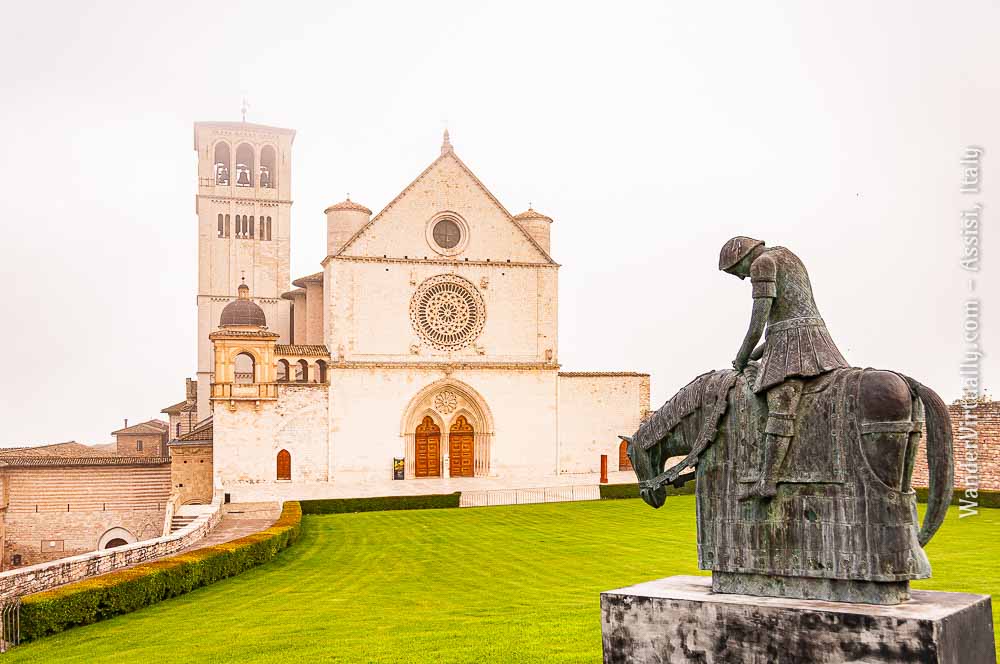
Imagine what that must have been like…returning home after 2 days, never even making it to battle.  It must have been a humbling experience.  He knew what God had told him, but everyone else knew him as the man who had gone off to prove himself in war only to return after 2 days.

            It was only after that and then more intense time in prayer that he had his true conversion experience.  Yet even with this profound experience, there was some confusion when God told him to repair his church.  He thought God intended him to repair buildings and that was what he initially did. He sold all he owned and begged, to repair buildings.  It was after years of that when he realized his true calling was to create an order of Franciscans who would live in poverty and served the poor and oppressed.  They had no need of restored buildings.  In some sense, they repaired the heart of the church.

            St Francis has so many things to teach us in his words and actions.  One part of his story that we don’t talk about is how discernment fit into his life and teaching.  Discernment is a word we often use but rarely define. It means trying to understand God’s will in your life.  The prayer we used for the collect today is a prayer written by St. Francis.  “Enlighten the darkness of my heart, and give me true faith, certain hope, and perfect charity, sense and knowledge, that I may carry out your holy and true command.”

I would think that almost all of us yearn for God’s direction in our lives.  We just have a hard time identifying that direction.  It’s comforting to know that St. Francis had this challenge as well.  He made mistakes, he sought glory and honor. He also faced consequences and learned from those consequences. 

            I imagine that when he returned from the crusade that he didn’t fight, people judged him harshly.  He almost surely judged himself. He might have felt like a failure.  This was his dream after all---to be a knight.  Yet in the end, that failure taught him something and can teach us something as well.

            This Gospel text is a famous one, mostly because it’s so incredibly comforting. At one time or another (probably many times) we feel as though we are carrying heavy burdens and long for rest.  A yoke is a tool used when working with animals that are pulling large loads.  The yoke can be used on one animal, or two animals can be yoked together.  Here, Jesus is offering to share the load with us—so that we might be yoked to Jesus. I have always loved that image. Yet there is a part that I have never really paid attention to.  “Take my yoke upon you and learn from me; for I am gentle and humble in heart...”  Learn from me. If we are truly yoked to Jesus, we cannot help but learn from him.  We can see what he sees, experience what he experiences.  When we see, or even just try to see with Jesus’ eyes, then everything looks different. 

            This text is perfect for honoring St. Francis---but not because of the promise of rest for the weary.  That’s important, but that wasn’t what St. Francis was all about. He was intent on knowing God and knowing the people who most needed God.  That requires humility. Jesus said, “Learn from me; for I am gentle and humble in heart…” If God, the creator and savior of humanity can be humble, why is it so hard for us?  Why are we so often convinced that we have the right answers?  I think some people mistake humility for insecurity or low self-esteem.  That’s not what it is.  It’s knowing your worth, but also knowing that your worth, and all that you have is dependent on God.  It’s means relying on God for direction and being willing to learn from all that you have experienced—even your failures. 

            St Francis wasn’t wrong to join the war. It was a step on his path and it helped form him.  Every step on our journeys is an opportunity to get closer to God.  Discernment isn’t a clear and direct path.  It’s a path.  The important thing is that while we are on that path, we are learning from God and about God.  We are praying to know God more deeply. And hopefully, we will have companions on that journey, others who will help us. (Sometimes they will companions with 4 legs who can remind us of what it is to care for another being, and to be loved unconditionally. Often it will be the two legged kind.)  Because it can be an exhausting journey.  But in the end…every step…every step leads us to where we need to be as long as we keep listening, keep learning from God.  

Monday, September 12, 2022

Is God Always Good?: September 11, 2022

 Year C, Pentecost 14                                   Exodus 32:7-14 & Luke 15:1-10                                                        

           We are going to try something right now that we don’t usually do in the Episcopal Church.  It’s called “call and response.”  I am going to say, “God is good” and you will respond “all the time.”  Let’s give it a try.  “God is good.” “All the time.”   I have been in faith communities when they have done this—never in an Episcopal Church of course… And when I hear it, I feel a couple of things.  For a moment, I get swept up in the optimism, the sheer joy.  But then a moment later, I think, “But is he?”  Many of us can think of times in our lives when things seemed so unfair, so desperately sad, we wondered, why is God doing this to me?  Why isn’t God showering me with the goodness I deserve?

            And if you have thought this, that’s ok. The Psalms are full of questions like this.  In the Old Testament, we see a number of examples of when God seems a lot more like an irritable human than a good and loving God.  For instance, was God good when he told Moses to leave him alone so his wrath could burn hot against the people and he could consume them?  He even offered to start a new nation with Moses as the father (rather than Abraham).  That means he was going to destroy the whole group, even though he promised after the flood he would never do that again.   

I will admit that God had some good reasons to be angry.  He was probably expecting that the people would be a little more grateful.  After all, God had brought the people out of Egypt, where they had been slaves.  He had shown them miraculous displays of power and mercy.  God had then given them 10 commandments to follow.  The first commandment was to not to create any idols.  Yet when Moses was delayed coming down from the mountain—where he was talking to God, the people began to panic and asked Aaron (Moses’ brother) to make gods for them.  Aaron complied. 

Now, in defense of the people, being lost in the desert is no small thing.  People die when they are lost in the desert. When your fearless leader disappears on a mountain, that would be fairly anxiety provoking.  So they turned to what they had known for so long…worshipping the most convenient and most accessible gods.  Unfortunately for them, there is nothing that makes God angrier in the Old Testament, than worshipping other gods.   

            God’s reaction is completely understandable to us humans.  We have all lost our temper at times.  But shouldn’t God be above such hair trigger anger?  Fortunately Moses is able to reason with God and this is where things get even more interesting.  Despite the fact that God is determined to punish his people, he is swayed by Moses’ arguments.  Moses reminds him of the promise he made to Abraham.  He basically says, “Remember Abraham? Do you remember how you told him that his descendants would be like the stars of the heaven?  Remember Abraham God?  He was a good guy.  Those are his descendants you are about to destroy.”  God changed his mind.

            This part of the story disturbs some people and I admit that it always makes me a little uncomfortable.  Most of us assume that God doesn’t change.  If God is all knowing and all powerful, he should not change.   Why would he? But when we talk about an unchanging God, we are really talking about God’s character that doesn’t change.  In the end, God is always good.  God is always merciful.  The fact that God was able to change his mind is further proof of his wisdom and goodness.

            If you look at our Gospel reading, you will see God’s character on full display, without any anger to cloud the true nature of his character.  Both parables tell a story of reckless love, compassion and devotion. In the first, Jesus tells the story of a shepherd who searches for the one lost sheep, leaving the other 99 to wander in the wilderness.  The other story is of a woman searching her entire house for a lost coin.  In both stories, the searcher rejoices upon finding the lost item.  The shepherd and woman don’t simply rejoice on their own, no they call their friends and family to rejoice with them.  Jesus then tells those who are listening that there will be more joy in heaven over one sinner who repents than 99 righteous.  In these stories, we see God as patient, determined and merciful.  We see a God who is good, all the time.

            One of the reasons I have a hard time with that phrase, is that I think about how I would feel if someone said that to me at a difficult time in my life.  I imagine someone walking into the ICU and saying, “God is good” and expecting me to respond, “All the time!”  I consider all the times I have counseled someone going through a difficult time and imagine myself saying that—saying “God is good” and expecting the weeping person to respond: “All the time.” It would not go over well.

Yet what I realized is that those aren’t examples of God not being good, those are times when life wasn’t good.  There is a big difference.  It’s tempting to blame God in times when life is difficult or unfair, but it’s important that we remember just because our circumstances have changed, doesn’t mean God’s character has changed.  It doesn’t mean God’s love for us has changed. God is bigger than what is happening in our world right now.  God is definitely bigger than what is happening in our individual lives right now.

 But here is what is astonishing about out God.  Just because God is bigger than our problems doesn’t mean that God is too big or too important to care.  In both our Old Testament reading and our Gospel, we hear of a God who cares deeply for his people, and not just the group, but every single person.  There is a moment in all our lives, perhaps many moments, when we are lost, even the most righteous of us.  God will not give up until each one of his people is found.  God will not give up on any of us until we are found, perhaps found many times. Not only that, but God will rejoice in those moments as well.  God will gather his angels in heaven and throw a party. That’s not just a good God. That is a great God.

Sunday, September 4, 2022

Cheap Grace: September 4, 2022

 Luke 14:25-33                     Pentecost 13, Year C

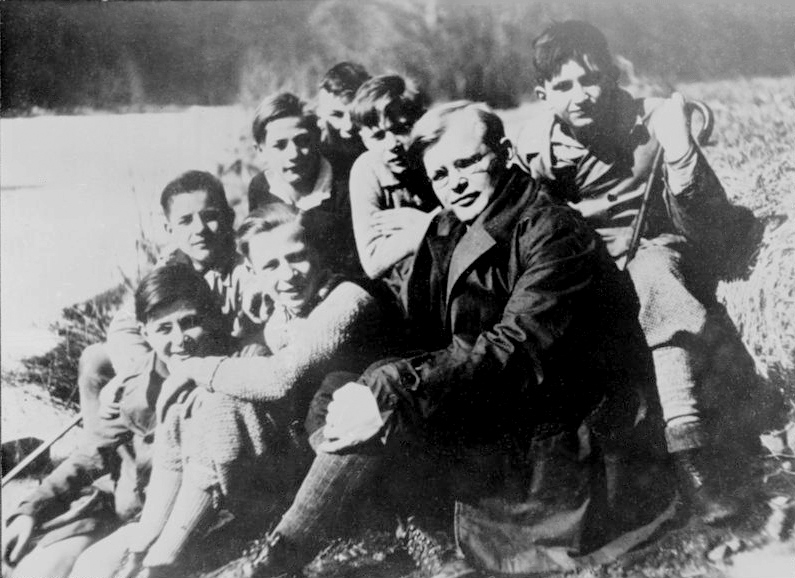
Dietrich Bonhoeffer had a very promising career in academia and the church.  He received his doctorate at age 21 and began teaching at the University of Berlin at 25.  He was also an ordained Lutheran Pastor. Two years after his ordination, in 1933, Hitler seized control of Germany.  Bonhoeffer could have gone the way of the majority of the Protestant Pastors in Germany and sworn allegiance to Hitler while covering the cross with a swastika, which was not uncommon at that time.  Instead, he created the anti-Nazi Confessing Church.  He also started an independent seminary for the Confessing Church.  During that time, he wrote The Cost of Discipleship which remains on many seminary’s curriculum to this day.  While the seminary met in secret, it was discovered and closed after only two years.   

It was soon after that when violence against the Jews became publicly sanctioned and people like Bonhoeffer realized that it was only going to become worse.  He joined a resistance group which was made up of political, military and religious leaders.  One of their accomplishments was providing for the safe escape of seven German Jews to Switzerland.  Unfortunately, that was also the last piece of evidence needed for the SS Guards to arrest Dietrich Bonhoeffer.  He was 36 years old when he was arrested and newly engaged to woman named Maria.

Jesus was known to use a fairly common oratory tactic, that of the hyperbole, exaggeration.  I like to remind people of that whenever they mock me for my tendency to exaggerate, as it is God ordained.  Today’s Gospel reading is a good example of this tactic.  “Whoever comes to me and does not hate father and mother, wife and children, brothers and sisters, yes, and even life itself, cannot be my disciple.”  This is a little extreme even for Jesus.  Hate, as we often like to say, is a strong word.   

The word that is translated to hate was a fairly common Hebrew* expression meaning “to turn away from, to detach oneself from….”  The text would then read, “Whoever comes to me and does not turn away from father and mother, wife and children, brothers and sisters, and even life itself, cannot be my disciple.”  While this is a little more palatable, it’s still pretty uncomfortable.  I am pretty sure you are never going find that on a book mark or magnet in a Christian Bookstore.  

One of the reasons that people struggle with this text is because it contradicts so much of what we consider Christian family values.  However, the Bible sends us mixed messages about family.  One of the 10 Commandments commands us to honor our mother and father.  But there are also horrific examples of violence against family. The first murder in the Bible is a man killing his brother.  Abraham, one of the great patriarchs of our faith was ready to kill his only son.  There are countless other examples of violence within families in the Old Testament.  While the New Testament lacks much of the violence we see in the Old Testament, it still has some mixed messages on how we consider families.  

The only stroy we know about Jesus as a child is when he leaves his parents so he can worship in the synagogue, never considering how his absence might affect them.  There is a story in Matthew where Jesus appears to ignore his family.  Jesus was addressing the crowd and someone told him, “Look, your mother and your brothers are standing outside, wanting to speak to you…” Jesus replied, “Who is my mother, and who are my brothers?” And pointing to his disciples, he said, “Here are my mother and my brothers! For whoever does the will of my Father in heaven is my brother and sister and mother.” I don’t know about the rest of you, but that would have hurt my feelings…just a little.

There is no doubt that Jesus loved his family and his family loved him.  Even after all his disciples abandoned him, it was his mother who stayed at the foot of the cross.  According to the Gospel of John, one of his last acts was to make sure that his mother was cared for after he died.  Jesus did not hate his family.  What he hated was the fact that so many people put other things or people above God.  Usually when we critique things that distract us from God, we mention things like wealth and success.  Yet, anything, even good things can get in the way of God.  Any time we put something, or someone over God, we are making a compromise in our lives as disciples. 

One of the books of that Bonhoeffer is best known for is the Cost of Discipleship.  In the book he argues vehemently against the idea of cheap grace.  He wrote, “Cheap grace is the preaching of forgiveness without requiring repentance, baptism without the discipline of the community, it is the Lord’s Supper without confession of sin.... Cheap grace is grace without discipleship, grace without the cross...”**    Bonhoeffer had seen all too clearly what happened to a church that chose safety and convenience over the sacrificial discipleship that Christ calls us to.  

For most of his life, Bonhoeffer was a confirmed bachelor, with no intent on marrying.  But he fell in love. During his two years in prison he and his fiancée Maria corresponded regularly.  She urged him to free himself to write emotionally and during that time some of his views softened a little and he went from writing theology to love poems.  Two days before his concentration camp was liberated he was hung.  When the liberators came, they buried or burned all the bodies because there were too many to identify.  Maria wandered Germany for months looking for him because she did not know he had died.  His parents learned of his death when they heard his memorial service on the radio.  His brother and two brothers in law were all killed at different concentration camps within days of each other.  Bonhoeffer loved his family and his family loved him. But in the end, he chose discipleship over them. That is what Jesus meant in our Gospel for today.

Most of us, probably none of us, will have to pay that kind of cost for discipleship.  But we are still called to make sacrifices.   In our Gospel reading, Jesus is telling his followers and all of us that there is nothing easy about the Christian life.  It’s not meant to be easy.  But if you think about your life, I think we often find that some of our most rewarding experiences have been the result of hard work and sacrifices. There will be times when we fall short and can’t make the sacrifices that are required. We can’t all be Dietrich Bonhoeffer.  We definitely can’t be Jesus.  But we can try to follow their example.  When we have an opportunity to choose between what is easy and what is right, we can choose to do the right thing.  We can choose God over convenience.   We can do that because we know that God’s love has already been poured out on us and there is nothing cheap about that.


[*] It was actually a common Semitic expression.   Semitic language includes a wide variety of languages in the Near East.  Hebrew is one the Semitic languages.

[**] Bonhoeffer, Dietrich.  Discipleship. p.44

Sunday, August 21, 2022

A Story of a Woman: August 21, 2022

Year C, Pentecost 11                    Luke 13:10-17  & Isaiah 58:9-14           

(This is told from the perspective of the woman in the Gospel of Luke.)                  

          My back was worse than usual today.  It’s always bad. I cannot remember a time when it did not hurt.  But this morning as I attempted to get up off the floor, I felt a stabbing pain, worse than usual.  I confess that I considered lying back down and not coming to the synagogue.  It’s not as if anyone would know if I wasn’t there.  But God would. And so I slowly stood and dressed myself.  It’s hard to get dressed when you are bent over like I am, but I am accustomed to it. It’s been many years like this.  I can’t remember how it happened.   I wasn’t born like this.  It happened slowly. The pain came first.  Then one day I realized I could no longer stand straight.  I could not see the sunrise or the sunset.   The sky was a memory to me.

            I remember the sky. I used to love to gaze at the stars at night and remember the promise that God made to Abraham.  And rainbows, I loved to see rainbows as they reminded me of the promise God made to Noah after the flood.  There are so many reminders of God goodness and mercy in the sky.  I miss seeing those reminders.  Now I see the dust as I walk through the village. I see small rodents and insects.  I see feet and the dirty hems of robes.   But sometimes I see beautiful things, like a stone with brilliant colors, or a cotton thistle with its spiky purple petals, a large puddle that reflects the clouds.  Sometimes, when God is especially good to me, I will see a baby crawling under me.  They look into my eyes and I try not to weep because it is the only time that someone looks into my eyes.  It is a lonely life, but I am never really alone. I know that deep down.  It’s just easy to forget sometimes.

            That is why I go to the synagogue week after week….so that I never forget that I am not alone.  Even if I cannot see reminders of God’s grandeur above me, I can still feel his presence.  I know that I make some people uncomfortable.  They assume that since I have this deformity, that I have sinned or my parents have sinned.  I have sinned, but no more than those who look down upon me, and there are many who do.  Didn’t the great prophet Isaiah tell God’s people to “satisfy the needs of the afflicted?”  I am afflicted, am I not?   I am not saying that all of the religious leaders are bad. Some are wonderful and caring and try to help as much as they can. But there are some who are more concerned about the rules.

            Recently I had heard about a man who was a leader, but also different.  He didn’t wear all the fancy robes.  He prayed at the temple, but he didn’t spend all of his time there.  He was even criticized for eating at the homes of sinners---prostitutes and tax collectors.   There were rumors that he had even healed people.  I knew I would never see more than his sandaled feet, but I hoped, I hoped that I would hear him sometime.  I can tell a lot about a person by their voice. I can tell a lot about a person if they merely bother to talk to me. 

            As I approach the synagogue, I hear a different voice.  It is a voice of someone with authority who is teaching the Holy Scriptures.   This is not unusual.  There are always learned men teaching at the synagogue.  But the way he talks, it’s different.  It is almost like he was talking to me.  Wait, he is talking to me.  I feel hands on my  back as they guide me to him.  I want to cry out in pain as it hurts as they steer me through the crowd, but I try not to.   Finally, I can sense someone leaning toward me, trying to get close to my face, trying to see me.  “Woman, you are set free from your ailment.”

 Those words, they are beautiful, but they can only be words.   Then he puts his hands on my head and slowly lifts my face.  I want to resist as I am afraid of the pain, but as his hands touch me, the pain begins to recede.  It starts with my head, then my neck, shoulders, and then my back and the rest of my body. It happens slowly, gradually, but eventually, I am standing.  And I am looking into his eyes and he is smiling at me.  I see compassion and love in those eyes.

            As I realize the pain is really gone I raise my hands high and throw my head back so I can see the sky, the beautiful sky. I praise God. I am surprised to hear pieces of the prayers that I have come to know by heart in my years worshipping here.  At the time they felt like empty words.  But right now I feel them in a new way.  I am almost embarrassed, but I cannot stop laughing.  I am so distracted I almost miss the synagogue leader reprimanding the crowd, telling us all there are six other days to be cured.  I know I should be worried about his judgment, but I can’t be, because I have been healed.

            Through my laughter and prayers, I hear Jesus respond, “And ought not this daughter of Abraham who Satan bound for eighteen long years, be set free from bondage on the Sabbath day.”  He calls me a daughter of Abraham.  He recognizes me not by my disability, but by my faith.  He has not merely healed my body, he has set me free from bondage.  He has lifted the burden from my tired back.  Just as Isaiah told the people so many years ago, remove the yolk from the people and satisfy the needs of the afflicted.

            I am healed, but the Hebrew people still carry the yoke of the Roman Empire.  We are not free, not in that way.  Some say this Jesus will free us, but I wonder if that is what he is really here for. I wonder if he heals us, so we can help the others who are oppressed—the outcasts, the forgotten. I know that now that I have been healed, I will do my best to serve those who cannot help themselves.  I know that is what Jesus wants of me. That is how I can use my freedom.

 What is it that Jesus wants from you? How can you bring healing to this broken world and the people around you?  As Isaiah writes, how can we be “repairers of the breach?”

Sunday, August 7, 2022

Faith in the Waiting: August 6, 2022

 Year C, Pentecost 9                             Genesis 15: 1-6 & Hebrews 11:1-3, 8-16                                

           Before we entered the adoption process, I spent six years going through fertility treatments.  When you are trying to get pregnant, there is a lot of waiting involved.  After I gave up on that and we started the adoption process---that was a whole new waiting game.  The adoption process as a whole took about two years.  After we brought Joshua home, there were 4 more months until the adoption papers came through and he was officially ours.  That was a total of 8 years of waiting for my husband and me.  During that time, there were a lot of desperate prayers, angry outbursts, and times of hopelessness.   The thing about waiting is that it usually involves a loss of control. Because if you were in control, you probably wouldn’t be waiting. 

            But the waiting I experienced, really doesn’t compare to the waiting that Sarah and Abraham experienced.  They waited about 25 years from the first time God promised them children until the day when Sarah gave birth to Isaac.    In our reading for today, we hear of the third time that God made this promise to Abraham.  We don’t know how many years have passed since the 1st time, but let’s assume it’s been awhile.  We can tell from Abraham’s response to God’s greeting that he’s not delighted about how things are going. 

Notice that God doesn’t bring up the promise of future children.  He simply says, “Do not be afraid, Abram, I am your shield; your reward will be very great.”  It’s not clear what Abraham is afraid of at this time.  He just took part in a military battle and some commentators hypothesize that Abraham is still afraid that the enemy he just defeated will return. 

It’s hard to say as he and Sarah have been through quite a bit since Abraham first heard the promise.  They left their homeland as God instructed them in chapter 12. They survived a famine and a run in with the pharaoh.  Most recently he had fought a battle and saved his nephew Lot who had been taken captive.  Clearly, he hadn’t been twiddling his thumbs while he waited.  Yet despite all that he had been through, all that he had accomplished, he was not satisfied.  God had promised that he would make him a great nation and how could be possibly birth a nation if his wife could not birth a son.  He had amassed great wealth and land, but there would be no son to leave all of this to. 

            So when God told him not to be afraid, he argued with God.  He told God that without a child he would have to leave everything he had to a slave.  God replied with another promise—that he would give him a son who would be his heir.  Then God did something interesting.  He brought him outside.   Often in the Old Testament, God is perceived as this otherworldly being who cannot be seen or touched-- only heard.  But in Genesis, God is very human like.  In the Garden of Eden, he strolled through the garden and made clothing for Adam and Eve.  He wrestled with Jacob.  Here, God seems to be standing right next to Abraham in his home and then walks with him outside and points to the sky.  I love this image of God accompanying someone from a place of light and warmth into the dark and showing him part of God’s own creation. 

Photo by Yong Chuan Tan 

            Once God does this, he makes the promise again.  Abraham’s descendants will be as numerous as the stars.   This time, Abraham believes.  Why?  Abraham asked God to give him something… presumably a sign.  God didn’t give him that. He didn’t even give him any more information. He didn’t give him a timeline or provide a persuasive argument or pep talk.   Nope.  God repeated the promise and showed him the stars.  Why would that give Abraham the faith he needed to continue to believe in this promise that had yet to be fulfilled?

            Our reading from Hebrews says, “Now faith is the assurance of things hoped for, the conviction of things not seen.”  Hebrews then goes on to use Abraham as the ultimate example of faith.  It was by faith that he was able to obey God and leave his home for an unknown land.  It was by faith that he could believe that even at the age of 75 (which was when God first made the promise) that Sarah would conceive a child.  God never gave him proof.  He didn’t give him a sign.  Instead, God showed him a revelation, the stars….a reminder of what God is capable of.  And so Abraham believed.

            Did that mean that suddenly Abraham became free from doubt and worry?  No.  Only a few verses later, Abraham was arguing with God again.  A few verses after that, we read: “As the sun was going down, a deep sleep fell upon Abraham, and a terrifying darkness descended upon him.”   Remember when God first showed him the stars?  It was night. Now we read that the sun is setting.  It sounds like Abraham and God have been talking and arguing for at least 12 hours.  Then, after all of that, there was still a terrifying darkness.

            Faith may be about assurance and conviction.  But it’s also about fear, anguish and lots of long conversations with God.  After this terrifying darkness descended, God continued to talk and he made a covenant with Abraham.  There in the dark, he made another promise.  I would like to tell you that did it for Abraham….from there on out he believed and never doubted. Alas no.  There were more missteps, more questions.  He even had a child with a slave of his house because he and Sarah needed to take control of God’s promise. 

            However, through it all, Abraham never gave up on God.  He continued to obey God, continued to serve God.  He still struggled with the promise, but he never lost that kernel of hope.  His faith wasn’t a roaring flame.  It was more like that pilot light on the stove that never quite goes out. That is what got him through the years of waiting.

            And here’s the thing about waiting.  Waiting in hope is not wasted time.  While I waited for a baby, I started writing about my experience.  I created wonderful fodder for future sermons.  I got into yoga.  I applied to St. John’s to be the rector.  I am not sure that would have happened if things had gone according to plan and I had two children by 2010.  Maybe it would have, but I can’t be sure. I made progress in those 8 years.   So did Abraham.  Abraham and Sarah built a foundation for the nation that they would one day birth.

            I struggle with this definition of faith from Hebrews.  I worry it makes it seem that if your prayers aren’t answered, then that means you must not have enough faith.  Don’t assume that if your prayers aren’t answered, it means that you don’t have enough faith or hope.  Don’t doubt your faith because you lack conviction and assurance.  That’s not what faith is.  Faith is about never giving up even when everything in life is telling you that it’s time to give up.  Faith is what happens in the waiting…what we do when the prayer goes unanswered.  Faith is a never ending conversation with God that sometimes happens in terrifying darkness.  Faith is knowing that even in the darkness, the stars still shine and God wants you to see them and know that not only did he create these stars, but he stands with you in the midst of that creation.

Sunday, July 24, 2022

When Prayer is Hard: July 24, 2022

 Year C, Pentecost 7                                 Luke 11: 1-13 and Genesis 18:20-32                               

            Every Sunday, we have two collects at the beginning of our service. The word collect is the Episcopal (fancy) was to say, “Opening prayer.”  We begin with the Collect of Purity which is the same every Sunday.  A few minutes after, we have the collect for the day which is unique every week and reflects some of the themes of the readings. There is a pattern to every collect, an anatomy of a collect. Every collect begins by addressing the name of God. It then acknowledges the character of God. 

            For example, today’s collect begins with the very simple “O God.” That’s the address.  The collect then goes on to acknowledge the character of God by saying, “The protector of all who trust in you, without whom nothing is strong, nothing is holy.”  Obviously there are many ways that we can describe the character of God.  This week, the author of the collect chose to focus on protection and trust. 

Now I don’t know about you, but when I make up my own prayers, I almost never start by acknowledging the character of God.  I figure, God knows what God is like.  Why do I need to describe God to God?  Yet there is a long tradition of this in our prayers and in the Psalms.  We even see it to a small extent in the way Jesus teaches his disciples to pray, “Father, hallowed be your name.”

            By teaching his disciples to start with “Father” he is suggesting a very familiar form of address, a more familiar form than Jewish prayers would have used at this time. In many ways the address itself is also an acknowledgment of the character of God.  Because what is a father?  A father is a parent, hopefully a loving parent who will listen to his children.  Jesus goes on to make the character description even clearer.  This is not just any ordinary father.  This is a father who is holy—whose very name is holy. That is what hallowed means.  This father’s name is holy and worthy of our respect and adoration.

            Why did Jesus teach this prayer?  Was he hoping it would be the one prayer that would unite all Christians across denominations? That is what happened, but I am not sure it was his intention. The disciples did ask him to teach them how to pray.  Consequently a lot of people read this Gospel story and conclude Jesus is prescribing a method of prayer.  However, I am not sure that Jesus was teaching how to pray as much as he was emphasizing the importance of knowing and understanding who we are praying to.  If you look at the parables that follow the teaching of the Lord’s prayer, Jesus isn’t telling stories of ways to pray.   The parables speak to the character of God. 

            It’s the same with the reading from the Old Testament. This reading from Genesis almost seems like we are hearing two people barter. God had decided that Sodom and Gomorrah was an evil city (this was before the angels were sent down to investigate by the way.)  However since God was a just God, he sent a few angels down to do some reconnaissance for him.  Right after he sent them, we have our reading from today where Abraham barters with him.  He knows that God will probably destroy the whole city, but he also knows that God is just and merciful.  In talking to God, Abraham appeals to this characteristic of God.  He says things like, “Shall not the judge of all the earth do what is just?” Here we have Abraham talking directly to the Lord Almighty, but interestingly he uses the same method of prayer as Jesus taught his disciples and the same ones we use in our collects.  He appealed to God’s character. 

            Was it because God needed a reminder of his own character?  I don’t think so.  I believe it was more of a reminder to Abraham.  Abraham had to remember that despite the power that God wielded (the power to create and destroy), he was still a just and merciful God.

            I have to admit that I struggle with the end of this Gospel reading.  “Ask and it will be given to you; search and you will find…”  I struggle because this is not always my experience of prayer and I don’t think its many people’s experience of prayer. Of course we do have prayers that are answered in beautiful and miraculous ways. But sometimes, our most ardent prayers are not answered, not in the way we hope.

Now, there are people who say that God always answers, but sometimes the answer is no.  And that makes sense a lot of the time.  But what about for the spouse or parent who is dying a horrible death and your prayer is that death can come quickly so as not to prolong the agony.? Why in the world would the answer be no?  Or what about for the 4 year old going through chemo?  The family prays the chemo will work and the child still dies.  How could the answer to that prayer be no?  I don’t know.  And I have to tell you, as a clergy person, those questions haunt me.  Because I want to be able to read this text: “Ask and it will be given to you…” with conviction, but I waffle a little. 

            Which is why I think that when we talk about prayer, the focus cannot be on how we pray or even the outcome of the prayer, but the God we are praying to …the character of God.   As I mentioned earlier, in my personal prayers…I don’t usually start by describing God.  However, while I was working on this sermon, I thought I would give it a shot.  I started with a low stakes thing. Joshua was having his first sleepover.  It was 11:30 and Joshua’s friend was passed out on the floor.  Joshua was wide awake.  I started, “Dear God, who loves me and wants me to sleep…who believes that in returning and rest we are saved, please make my kid go to sleep…”  While it was not immediately effective, I found it comforting. It made me feel less alone in that moment.

            Prayer is a really difficult thing.  When I was in the hospital, I found it extraordinarily hard to pray. When I got home there were dozens of cards from people telling me that they were praying for me, and that meant so much. It reminded me of how important the church community is.  Because when we don’t have the strength to pray, we have others praying for us. 

            That is one of the reasons why we have baptisms on Sunday mornings, so the whole community can pray for the child.  Thad and his family don’t live locally (yet), but for now, Thad will be a baptized member of St. John’s.  And when you find a new community, we will rejoice with you. There will be difficult times as parents, as a family, but please know that you are not meant to do this alone.  God wants you to have a community of the faithful, to be there when you aren’t strong enough to pray on your own—to remind you that our God is a loving God who believes in the importance of rest and restoration.  Our God is a holy God who loves us even more than we love our children or our most cherished friend.  Imagine that—a God who loves us more than we love anyone on this earth. That is a God worth praying to.

Sunday, July 17, 2022

Stop Freaking Out: July 17, 2022


 Year C, Pentecost 6                                   Luke 10:38-42                                                    

         Ever since the story of Martha and Mary was first read, it has been interpreted and misinterpreted in about 100 different ways.  Often times Mary and Martha are pitted against one another. You are either Mary or Martha.  And if you are Martha, you better learn how to be more like Mary. Books like: Having a Mary Heart in a Martha World, Having a Martha Home in a Mary Way, Made Like Martha: Good News for the Woman Who Gets Things Done---have oversimplified this story. (At least the titles have.) 

People have used this story to create archetypes for all women—you are either Mary or Martha. Mary is the devoted learner who sits at Jesus’ feet as a disciple would.  Martha is the worker bee who can’t be bothered to stop and listen because she has too much to do. At times, people seem to be trying to use this story to describe the right and wrong way to be a disciple.

          But really, it’s about different ways of being a disciple and the challenges that arise when all of the preoccupations of our life get in the way of being in relationship with God. There is little doubt that Martha was a wonderful disciple of Jesus.  Showing hospitality was incredibly important at that time.  One doesn’t have to look any further than the story we have from the Old Testament when Abraham drops everything to help three strangers wandering by his tent.  Anyone who has spent any time volunteering in the church knows that a lot of what needs to be done is the very stuff that Martha was doing. 

          Then why would Jesus be critical of Martha? I am not sure that is what is really happening here.  Notice that he’s not criticizing her for what she is doing, not even for what she is complaining about.  He said, “Martha, Martha, you are worried and distracted by many things….”  If you look at the Greek that this Gospel was originally written in, you might note that better translation would be: “Martha, Martha, you are completely freaking out.”   The Greek word that is translated to worried is describing someone absolutely panicked.

This was more than just dinner party stress.  It was stomach churning, headache producing---panic. I am sure there were a variety of things contributing to the panic.  But I don’t think it’s a coincidence that we are at the point in the Gospel when Jesus has set his face toward Jerusalem.  Just a few chapters before, Jesus had started talking about his imminent death.  Maybe Martha was thinking this might be the last time she would see him and here she is doing the dishes when what she desperately wanted to do was sit at his feet like her sister Mary.  But something was stopping her.

          When Jesus told her that Mary had chosen the better part and that was not to be taken away from her—he wasn’t minimalizing what Martha had accomplished.  He was simply reminding Martha that there was a better part to play at that moment.  There was something else she could be doing.  There was a way to step away from the anxiety and panic.  We don’t know how Martha responded, but I hope she sat down for a few minutes, to absorb God’s presence.  Because there he was, the very embodiment of peace, the balm for her weary soul.  All she had to do was stop for a minute and listen.

          If it was hard for Martha to find peace when she was in the presence of God in the flesh, it is no wonder that we have a hard time releasing ourselves from the burden of anxiety in times such as these.  I could start listing the many anxiety provoking things going on in our world, but I fear that would not be helpful.  We all know what is causing us anxiety because it seems to be constantly with us.  With the advent of smart phones, it’s impossible to step away even for a moment.  And it’s not just smart phone causing the problems. The pandemic has intensified all of life’s challenges. 

          In the last 2 years, the number of adults with anxiety disorders has increased by 26%. The number of children with an anxiety disorder has doubled over the course of the pandemic.  The number of people with mental health issues was increasing before the pandemic.  The pandemic simply accelerated the mental health crisis in our country. The rates of depression have also increased exponentially, but that is a conversation for another time.  The point is that we are in anxious times. 

          Many people wonder why Martha went to Jesus to complain about her sister rather than going directly to her sister to ask for help.  I think it was because she knew that that the help she needed was not the help Mary could provide.  She needed (like we all need) Jesus’ help.  She needed healing for her mind---a peace that passes all understanding.

“Martha, Martha, you are worried and distracted by many things; there is need of only one thing…” The word for distracted also means to be pulled in many different directions.  Even when we were in part of the pandemic when we were all locked down and limited in what we could do and where we could go, our minds were still being pulled in different directions.  When that happens, our lives become so fragmented, we can barely remember what the big picture is.  For Martha, the big picture was right in front of her---God incarnate.  For us, the big picture—God’s purpose for our lives is a little more elusive. We may hear God calling our name, but it’s a lot easier to ignore.

This is a hard sermon for me to preach because I struggle with anxiety.  I find that the distractions of life can consume me at times. I wonder. I wonder if we could find a way to be distracted by God. If our distractions have started to consume us, what if we found small ways to let God break through and distract us from our own fears and anxieties?

My view from traffic
 That will look different for each one of us. What I know is that God’s peace is here, in this place.  I felt it the first time I walked in. I feel it when the light passes through the windows in a new and glorious way. God’s peace is out there in our cemetery where the names of those who have passed on to the next life surround us.  God’s peace is looking out over the water (even when on the HRBT) when the sun hits the water in a way that makes you forget you are sitting in traffic. 

God’s peace is everywhere, if we look for it. Take some time to consider what thing or person or place distracts you enough to experience some peace and then make some space in your life for opportunities to search for God presence.  When you have found that presence (that peace that passes all understanding)--- bask in it.  Even for a moment.  Because that moment, that moment leads to other moments and those moments are the ones that will save you.