Showing posts with label Year C Pentecost 13. Show all posts

Tuesday, September 9, 2025

When Paul was Tactful: Sept 7

Year C, Pentecost 13                                                          Philemon 1-21                                                    

           In 1619, about 20 Africans landed on the coast of Virginia, about a mile from my previous church.  While slavery was not yet institutionalized in the colonies, these 20 individuals were enslaved, mostly in Jamestown.  The first recorded baptism of an enslaved person was William Tucker in 1624.  He was baptized by the rector of my previous church and many more baptisms of enslaved people followed. What we don’t know is how those baptisms happened.  Were they required? Did William Tucker’s parents want him to be baptized or was it the decision of the Christian who owned him?  We were still the Church of England in 1624, but the practice continued through the first 80 years of the Episcopal Church, until slavery was abolished. 

            I imagine that many of you can see the disconnect between baptizing a person into the Christian faith while still maintaining that the person can be owned.  Some might assume that the enslavers just weren’t thinking that way, as if it didn’t occur to them that baptizing enslaved people might then lead to different kinds of freedom.  Evidently someone was thinking that way because in 1667, the General Assembly in Virginia felt the need to pass an act that said being baptized doesn’t exempt an enslaved person from bondage. In other words, being baptized didn’t make you free, at least not if you were African.  The words that were used in the baptismal service was that the individual being baptized was “grafted into the body of Christ’s Church”[1] But according to lawmakers at the time, being a Christian didn’t give someone rights in this life— only the next. 

            Of course slavery wasn’t just in the United States.  It was happening during Jesus’ life as well, not quite in the same way.  At the time, slavery didn’t last a lifetime.  People were usually freed by the time they were 30.  In Paul’s letter to Philemon, we heard a little about slavery in the ancient world. Philemon is the 3rd shortest book in the Bible…which means we have the rare opportunity to discuss an entire book of the Bible in about 10 minutes.

            The other unique thing about this letter is that it’s to a person rather than a community.  Why would a personal letter be included in our sacred text?  If you read the entire run on first sentence, you will see that it’s not just directed to Philemon and a few others, Paul included “the church in your house.”  At this time, it was common to worship in people’s homes.  There were no Christian churches, so new Christians organized around a home and family.  This letter was directed to an individual, but it was meant to be shared with the community, which meant it had wider implications than just a few people.  Paul knew that and evidently those who put together the canon of scripture saw that as well. 

Most scholars believe that Paul was a prisoner when he wrote this letter and that was possibly how he met a man named Onesimus who was an enslaved man who escaped.  During Paul’s time with Onesimus, he was converted to Christianity.  It’s not clear whether Onesimus was in prison with Paul or was simply helping  him while he was in prison.  Prisons at this time were truly horrible places and your needs (food, clothing, etc) had to be provided from someone on the outside.  Since Paul wrote about how useful Onesimus was, it’s possible that he was supporting Paul while he was imprisoned.  This letter is asking Philemon to forgive Onesimus (because he escaped) and possibly free him.

            Since Paul can often be rather offensive and unconcerned about the feelings of the person receiving the letter, I find the tone of this letter fascinating.  On the one hand, I want Paul to write Philemon and call him out as a hypocrite because he should obviously see why being a Christian and owning someone is wrong.  But Paul is uncharacteristically careful in how he handles this confrontation. 

He started how he often started letters, he told the receiver how he prayed for them and thanked God for them, in particular, “for your love for all the saints.”  When Paul referred to “saints” he was referring to all Christians.  He was reminding them of the compassion they already exhibited. He then went on to say, “though I am bold enough in Christ to command you to do your duty, yet I would rather appeal to you on the basis of love…”   What frustrates some modern readers, is that Paul never explicitly told Philemon to give Onesimus is freedom, nor did he condemn slavery as a whole.  Instead he asked that he should receive him “no longer as a slave but as more than a slave, a beloved brother.”

            The point might seem clear to us, but during the time when slavery was still around, slave holders used this text to defend slavery. They said, “Look, Paul wasn’t telling Philemon to free him, he was just asking that he not be punished for running away and that since he was now a Christian, he should be treated just a little better.” I think Paul was arguing for freedom. He later said, “So if you consider me your partner, welcome him as you would welcome me.”  Treat this man who was formerly enslaved as you would the apostle Paul…the man who was highly respected in this community.  Paul also later shared that Philemon became a Christian because of Paul, which means Paul would have been held in high esteem by Philemon and his family.

 Notice the familial language that Paul used.  He referred to Onesimus as his child. He said that Philemon should consider him a beloved brother.  You can’t enslave your child or your brother.  Paul didn’t appeal to Philemon’s humanity or sense of justice.  He appealed to his Christian faith, his compassion and understanding of what it is to be a Christian.  When we say that we are siblings in Christ, we mean that. 

Now you might thing I am avoiding the Gospel, but the truth is I really wanted to preach on Philemon. However, they are related. Here is the 30 second explanation of the Gospel.  Jesus was using hyperbole to get people’s attention.  He was not advocating for us to hate our family.  But he was saying that people should prioritize God, even over family.  That doesn’t mean we are taking love from our family, as there is not a limited supply of love. It means we are expanding who we can love.  All Christians are our family.  And if all Christians are our family, then we really need to consider more carefully how we treat one another…which is why Philemon is in the Bible…which is why the men who put together the Bible 1800 years ago thought, this one page letter needed to be remembered for a very long time. 

Now you might be thinking, what about people who aren’t Christians? Are we allowed to treat them poorly? No.  There are plenty of other places in the Bible that talks about how God loved people from all faiths.  But in Philemon, Paul is talking about how we can use our Christian faith to guide us in how we treat the people who are considered less than.  Just imagine for a second if we could just get Christians in the world to actually do that…even if Christians were just treating other Christians well.  That would be some serious progress.

Now the reason Paul’s tone in this letter matters is that it can guide us in how we make certain arguments.  It’s satisfying to label people as hypocrites and bigots.  But it never accomplishes anything.  Paul could have just told Philemon what to do, but he wanted it to sink in.  He wanted Philemon to know why he was freeing Onesimus and expanding his family.  Because then he could be an example for others as well.  The other thing that made a difference in this situation is that Paul already had a relationship with Philemon.  He even said at the end of the letter, please make up a guest room, because I am planning to visit.  Philemon knew that Paul was going to check on Onesimus.  Paul was showing him how committed he was to this situation with his words and actions. 

What makes this letter so incredible is that not only does it teach us how our faith informs how we treat others.  It also helps us talk to others when we are trying to help them see something that might be quite obvious to us.  Just like Paul wrote in his letter, we must appeal to others on the basis of love, not anger or righteous indignation. Love.


[1] 1662 Book of Common Prayer

Sunday, September 4, 2022

Cheap Grace: September 4, 2022

 Luke 14:25-33                     Pentecost 13, Year C

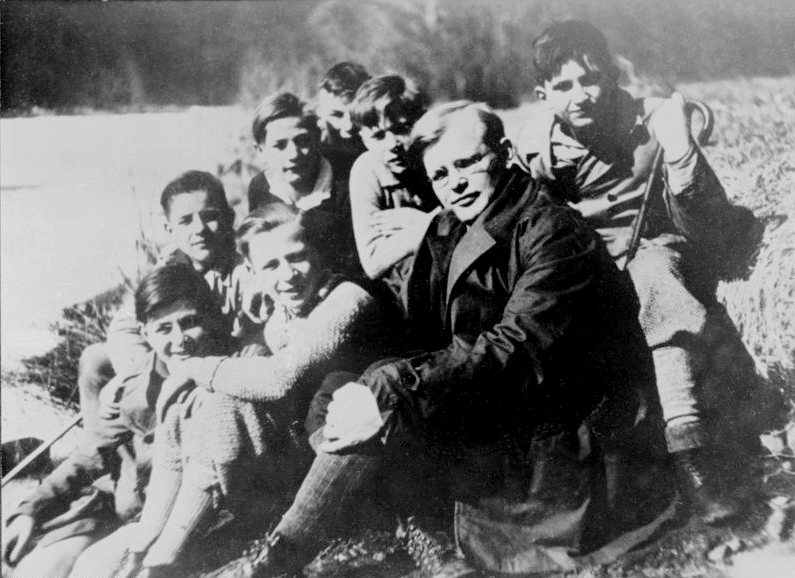
Dietrich Bonhoeffer had a very promising career in academia and the church.  He received his doctorate at age 21 and began teaching at the University of Berlin at 25.  He was also an ordained Lutheran Pastor. Two years after his ordination, in 1933, Hitler seized control of Germany.  Bonhoeffer could have gone the way of the majority of the Protestant Pastors in Germany and sworn allegiance to Hitler while covering the cross with a swastika, which was not uncommon at that time.  Instead, he created the anti-Nazi Confessing Church.  He also started an independent seminary for the Confessing Church.  During that time, he wrote The Cost of Discipleship which remains on many seminary’s curriculum to this day.  While the seminary met in secret, it was discovered and closed after only two years.   

It was soon after that when violence against the Jews became publicly sanctioned and people like Bonhoeffer realized that it was only going to become worse.  He joined a resistance group which was made up of political, military and religious leaders.  One of their accomplishments was providing for the safe escape of seven German Jews to Switzerland.  Unfortunately, that was also the last piece of evidence needed for the SS Guards to arrest Dietrich Bonhoeffer.  He was 36 years old when he was arrested and newly engaged to woman named Maria.

Jesus was known to use a fairly common oratory tactic, that of the hyperbole, exaggeration.  I like to remind people of that whenever they mock me for my tendency to exaggerate, as it is God ordained.  Today’s Gospel reading is a good example of this tactic.  “Whoever comes to me and does not hate father and mother, wife and children, brothers and sisters, yes, and even life itself, cannot be my disciple.”  This is a little extreme even for Jesus.  Hate, as we often like to say, is a strong word.   

The word that is translated to hate was a fairly common Hebrew* expression meaning “to turn away from, to detach oneself from….”  The text would then read, “Whoever comes to me and does not turn away from father and mother, wife and children, brothers and sisters, and even life itself, cannot be my disciple.”  While this is a little more palatable, it’s still pretty uncomfortable.  I am pretty sure you are never going find that on a book mark or magnet in a Christian Bookstore.  

One of the reasons that people struggle with this text is because it contradicts so much of what we consider Christian family values.  However, the Bible sends us mixed messages about family.  One of the 10 Commandments commands us to honor our mother and father.  But there are also horrific examples of violence against family. The first murder in the Bible is a man killing his brother.  Abraham, one of the great patriarchs of our faith was ready to kill his only son.  There are countless other examples of violence within families in the Old Testament.  While the New Testament lacks much of the violence we see in the Old Testament, it still has some mixed messages on how we consider families.  

The only stroy we know about Jesus as a child is when he leaves his parents so he can worship in the synagogue, never considering how his absence might affect them.  There is a story in Matthew where Jesus appears to ignore his family.  Jesus was addressing the crowd and someone told him, “Look, your mother and your brothers are standing outside, wanting to speak to you…” Jesus replied, “Who is my mother, and who are my brothers?” And pointing to his disciples, he said, “Here are my mother and my brothers! For whoever does the will of my Father in heaven is my brother and sister and mother.” I don’t know about the rest of you, but that would have hurt my feelings…just a little.

There is no doubt that Jesus loved his family and his family loved him.  Even after all his disciples abandoned him, it was his mother who stayed at the foot of the cross.  According to the Gospel of John, one of his last acts was to make sure that his mother was cared for after he died.  Jesus did not hate his family.  What he hated was the fact that so many people put other things or people above God.  Usually when we critique things that distract us from God, we mention things like wealth and success.  Yet, anything, even good things can get in the way of God.  Any time we put something, or someone over God, we are making a compromise in our lives as disciples. 

One of the books of that Bonhoeffer is best known for is the Cost of Discipleship.  In the book he argues vehemently against the idea of cheap grace.  He wrote, “Cheap grace is the preaching of forgiveness without requiring repentance, baptism without the discipline of the community, it is the Lord’s Supper without confession of sin.... Cheap grace is grace without discipleship, grace without the cross...”**    Bonhoeffer had seen all too clearly what happened to a church that chose safety and convenience over the sacrificial discipleship that Christ calls us to.  

For most of his life, Bonhoeffer was a confirmed bachelor, with no intent on marrying.  But he fell in love. During his two years in prison he and his fiancĂ©e Maria corresponded regularly.  She urged him to free himself to write emotionally and during that time some of his views softened a little and he went from writing theology to love poems.  Two days before his concentration camp was liberated he was hung.  When the liberators came, they buried or burned all the bodies because there were too many to identify.  Maria wandered Germany for months looking for him because she did not know he had died.  His parents learned of his death when they heard his memorial service on the radio.  His brother and two brothers in law were all killed at different concentration camps within days of each other.  Bonhoeffer loved his family and his family loved him. But in the end, he chose discipleship over them. That is what Jesus meant in our Gospel for today.

Most of us, probably none of us, will have to pay that kind of cost for discipleship.  But we are still called to make sacrifices.   In our Gospel reading, Jesus is telling his followers and all of us that there is nothing easy about the Christian life.  It’s not meant to be easy.  But if you think about your life, I think we often find that some of our most rewarding experiences have been the result of hard work and sacrifices. There will be times when we fall short and can’t make the sacrifices that are required. We can’t all be Dietrich Bonhoeffer.  We definitely can’t be Jesus.  But we can try to follow their example.  When we have an opportunity to choose between what is easy and what is right, we can choose to do the right thing.  We can choose God over convenience.   We can do that because we know that God’s love has already been poured out on us and there is nothing cheap about that.


[*] It was actually a common Semitic expression.   Semitic language includes a wide variety of languages in the Near East.  Hebrew is one the Semitic languages.

[**] Bonhoeffer, Dietrich.  Discipleship. p.44

Sunday, September 8, 2019

Bigger Family: Sept 8, 2019


Year C, Pentecost 13                                                                  
Luke 14:25-33                                                                       

            Like many of you, I was disturbed to see the images of Hurricane Dorian battering the Bahamas and I was of course worried for the people of Florida and the Carolinas.  But I have to confess, I wasn’t that worried. I wasn’t overly concerned---until we were in the path of the hurricane and suddenly I was glued to the news because it had the potential to affect me, my family and the people near and dear to my heart.  While that is not a noble admission, I don’t think it’s particularly shocking to hear someone admit that they are more concerned about things that directly affect them than those things that have no direct effect on them.  Humans are innately self-centered.  Our primary concern is our survival and the survival of our family.  While that is normal, it’s not particularly Christian.  To be Christian, is to care for all people, especially those in need. 
            This Gospel text today is painful.  I have had two Sundays off preaching.  The last time I preached, Jesus announced that he had come not to bring peace, but division.  Now Jesus is telling the crowd that is following him, “Whoever comes to me and does not hate father and mother, wife and children, brothers and sisters, yes, and even life itself, cannot be my disciple.” If Jesus was trying to recruit more people to his mission, that was a serious misstep.  There are some things in this Gospel text I can explain that might make this reading a little more palatable.  But to be honest, it’s not supposed to be a comfortable reading.  While there are all kinds of Bible passages that bring comfort and solace, this is not meant to bring comfort. Jesus was many things—but he was not—a people pleaser.  He was a truth teller.  Some of those truths got him killed.
            I often think of this text when people reference family values in the context of the Bible.  The way we think about family values now has very little to do with what Jesus taught.  It’s true that hate is probably not the best translation.  To hate is a Semitic expression meaning to turn away from, to detach from.[1]  In using the word hate, Jesus was not suggesting that we have a disdain for our family, or even a mild dislike.  When Jesus told people they had to hate their family and even their life—he meant that family was no longer to be your priority.  Jesus was very clear on what was to be the priority of his disciples---following him.  When a disciple asked to bury his father before following Jesus, Jesus told him to let the dead bury the dead.  Jesus did not typically give people time to get their affairs in order and then follow him.  The 12 apostles left their homes and family.   Jesus left his home.  While he certainly had a loving mother who he cared for, that love was rarely described in the Gospels.  
            Earlier in the Gospel of Luke Jesus was speaking to another crowd.  Someone told him that his mother and brothers were there and they wanted to talk to him.  He replied, “My mother and my brothers are those who hear the word of God and do it.”  On the one hand, I would think that would have been fairly painful for his family to hear that.  On the other hand, this is the same boy who walked away from his parents at age 12 and went to a temple.  When his parents found him 3 days later he replied, “Why were you looking for me? Of course I would be in my father’s house.”  Now this is not to say that Jesus was cruel or uncaring to his family. I am sure he was a loving son.  But for him, family was bigger than those related to him by blood.  His family was all those who heard the word of God and did it. 
At its essence, that is what Christianity is—it is the creation of a new broader family.  We are no longer merely linked to those we grow up with or those we know, we are linked to all Christians everywhere.  There are other places where Jesus implies we are linked to all people regardless or faith, but here, Jesus is talking about his followers.  That would have been a revolutionary idea at the time, because the Jewish faith was very focused on the family.  Those were your people.  You even married your cousin. Jesus was essentially saying that families no longer had borders.
            So what does that mean? Does that mean we have to love our families less?  Of course not.  But it does mean that God calls us to shift the way we think of our families.  There is no limit to our ability to love.  It’s not like we have a certain amount of love or compassion and we can’t possibly spare more.  God calls us to expand the circle of those we care for, those who we consider family. 
Having an adopted son who doesn’t look anything like me, and has a completely different lineage than I has shifted my understanding of family.  It has not led me to believe that color or culture doesn’t matter. Quite the opposite. What it has done is opened my eyes to different groups of people and different issues, because now, they are mine.   You don’t have to legally adopt a child to understand that.  Families come in all kinds of glorious shapes, sizes and colors. In Paul’s letter to the Ephesians he wrote,  “(God) destined us for adoption as his children through Jesus Christ…. to the praise of his glorious grace that he freely bestowed on us in the Beloved.” We are not merely children of God, we are adopted children of God.  We are a mishmash of race, sexual orientation, differing physical and emotional abilities, age, gender---you name it and our Christian family has it.
Typically when a storm passes us by, our initial reaction is to give a sigh of relief and then sometimes thank God that it spared us.  But the thing is, often when we miss the worst of a storm, it’s because the storm hit somewhere else.  Obviously we cannot control where a storm hits, but that doesn’t mean we are powerless.  When you find yourself thanking God for sparing you, your property or people you love, consider those who were effected and try to give something, even in a small way. With this hurricane, it might be giving to Episcopal Relief and Development or any one of the many organizations that provide assistance when disaster strikes.  Because the thing is, we are one big family.  This whole world is one family.  We take care of our family.


[1] Luke Interpretation by Fred Craddock p. 181

Sunday, August 14, 2016

August 14, 2016: Divisive Jesus?

Year C, Pentecost 13                                     
Luke 12:49-56                                                

            When I read this Gospel passage, the following questions struck me, “Why didn’t I take my vacation this week? How come Mark got to preach on treasure and heart and I got stuck with angry Jesus? What’s so wrong with preaching on a Psalm once in a while?” The truth is, I actually love the idea of preaching these kinds of texts.  I love reading commentaries for hours on possible explanations.  But when my research is over and my fingers hover over the key board and the cursor blinks mockingly at me—I go back to those earlier questions. Why am I not on vacation? Part of my current problem is that I have been preaching a lot about the Body of Christ and the need to look past the things that divide us.  You know what is really hard for a preacher---when Jesus actually contradicts you.  It does not look good.  I would say my number one rule in preaching is: “Don’t contradict Jesus.”  Thus, after months of preaching about breaking through the walls that divide us, we have this passage.

            Jesus said, "I came to bring fire to the earth, and how I wish it were already kindled! I have a baptism with which to be baptized, and what stress I am under until it is completed! Do you think that I have come to bring peace to the earth? No, I tell you, but rather division!”  It gets worse from there.  After that he goes into unnecessary detail about how families will be divided…because of him. 

Jesus is our Lord and Savior.  He came to free us from our sins.  He came to show us how to love.  He came to forgive us.  He never said he would be nice about it.  We have this gauzy water color version of Jesus in our heads.  It’s the same one we saw in our children’s Bibles.  Yes, Jesus is a compassionate and forgiving.  He also said some really difficult things.  He was trying to change the world and he did not have much time to do it. At times, he was very harsh with people.

            Just a few chapters before this one, we heard that Jesus, “set his face to go to Jerusalem.”  This was a point of transition.  It tells us that he was preparing for his death. While he was all powerful and divine, he had taken on  human form.  As a human, he knew that he would suffer great physical and emotional pain.  When he said, “I came to bring fire to the earth and how I wish it were already kindled! I have a baptism (which in this context meant death) and what stress I am under until it is completed!”  A lot of people hear this and think that Jesus is excited about the judgment that will befall humanity.  It does say that he brought fire…but the fire that he brings is the same fires that burns him.  It is his own death and he is closer to it every day.  Of course he wishes it was already kindled.  Of course he’s a little stressed about it. Imagine living for years knowing that you were going to have a gruesome death.  Imagine what it would feel like every day as that moment got closer and closer. 

            That makes pretty good sense, but what about this whole bringing division instead of peace?  We call him the Prince of Peace.  The Prince of Peace should not be talking like this.  While there is no easy answer for this, I believe there is an explanation.  Notice that Jesus does not say, I am bringing division and I could not be more pleased about.  He does not say that he wants the world divided.  He just knows it will be.  When Jesus was born into this world, it was already horribly broken.  People thought the Messiah would be a quick fix.  He would come and say some nice things, do a couple of miracles and all of sudden all would be well. Jesus knew that it would be much harder than that.  God tried the easy way ---he have us paradise in the Garden of Eden.  It did not last long. 

While Jesus accomplished a great deal in the three years he was in public ministry, it didn’t make much of a difference.  People were still insistent on overthrowing the Romans.  For many people in Israel, peace was a world where Israel was the most powerful nation.  In their eyes, peace was not about justice, it was about who had the power.  That is similar to how we operate today.  There would be peace if the United States was in charge. I find myself longing for the days when we were the only superpower. That is the kind of peace that I believe Jesus wasn’t bringing.  He wanted peace that was built on justice and mercy, not power. 

There is a blessing we use at the end of the service.  “The peace of God which passes all understanding will guard you hearts and minds in Christ.” That is the peace that Jesus wanted—that he still wants, but it was beyond their understanding then and it continues to be misunderstood by us today.  That is why we still say that blessing at the end of the service.  In our best moments, we yearn to understand that peace.  Jesus also knew the only way to teach people about this peace that passes all understanding was to humble himself in front of those who had the supposed power, humble himself to the point of death.  In order for that lesson of real peace to sink in, his body was broken.  Jesus had to break so people would finally understand what it was to be whole, to be holy.  We had to witness him break himself for us.

            Yet even after that ultimate sacrifice, Jesus knew that we would be even more divided than before.  When the Gospel of Luke was written (about 40 years after his death) the Jews who chose to follow Jesus were ostracized.  They could no longer worship in their synagogues.  Much like Jesus predicted, families were torn apart.  This is not a pretty picture, and it is not meant to be. 

            I started by saying that by speaking about the importance of unity and the Body of Christ, I had contradicted these words of Jesus.  I was being a little overly dramatic. Jesus did not like division any more than any of us.  But he knew that when you follow him with authenticity and passion, you are going to tick some people off.  Being a Christian is not about pleasing people.  It’s not about going with the current.  It’s going against it.  Being a Christian isn’t easy.  It’s not just about showing up to church once awhile (although that is a really good start).  It’s about making Jesus your number one priority.  Every decision is made in the context of what it is to be a follower of Christ.  I can guarantee you that if you take that road, it is not easy. I fail in some way almost every day and that is when I have the courage to try.  The worst for me is when I do not even have the courage to try.  Failing is so much better than capitulation.  At least we try.      

            In the very beginning of the Gospel of Luke, Mary and Joseph brought their infant son to the temple to be presented.  A holy man named Simeon was there and he immediately blessed them and said, “This child is destined for the falling and the rising of many in Israel, and to be a sign that will be opposed… —and a sword will pierce your own soul too.” Talk about a mixed blessing! From the very beginning, Jesus’ own parents knew that their son would bring conflict to the world and even pain to his mother.  But they also knew that the pain would be temporary and that in the end there would be salvation for all. 

After we adopted Joshua, every parent told us how wonderful and hard it is to be a parent.  No one said, “It’s really not worth all the pain and agony.” We should treat our God with the same love we have for our children, our parents, our partners, our best friends...   We should make him just as much as a priority. God already gave us everything.  He asks the same of us, everything.