Wednesday, September 13, 2023

Jesus is even in the conflicts: Sept 10, 2023

Year A, Pentecost 15                                         Matthew 18:15-20

                The first time I looked at the Gospel reading for Sunday, I thought…great…it’s my last Sunday and the Gospel reading is about church discipline. Maybe the epistle reading is better. I mean it starts well, “love one another.”  Then it devolves into exhortations on what to avoid: adultery, murder, drunkenness, debauchery and licentiousness.  Fantastic.  The Old Testament reading wasn’t much better. Of course, they all have some redeeming qualities, but I was hoping for something a little easier for my last Sunday.  But…as I have mentioned several times in sermons, Christianity isn’t supposed to be easy. 

                To really get a good understanding of this reading from Matthew, you need to read the whole chapter, because as is so often case, context is everything.  When we read just these 5 verses, we see the accusatory part.  It doesn’t sound much like Jesus.  Aren’t we supposed to forgive 7 times 70 times. Yet here it seems he’s telling the community that they can cast out members who refuse to cooperate.  And the language…Jesus says you should treat them as you do a Gentile or tax collector.  That’s not good.  The people he was talking to didn’t like Gentiles or tax collectors. They wouldn’t eat with them, and they definitely wouldn’t worship with them.  Yet we see Jesus eat with those outcasts.  We see him defend them and even name one (Matthew) a disciple.  Why would Jesus change course and tell people there is a limit to forgiveness and that Gentiles and tax collectors should be maligned?

                Again, it all comes back to context.  The chapter begins with Jesus telling people that they must welcome little children.  Now, in our day and age, this would seem like a no brainer.  Of course Jesus would love the little children.  We have a song about it.  Back then, children weren’t valued as they are today.  Most people treated them as they would treat an outcast.  Then right before our reading for today, Jesus tells the story of the shepherd who has 100 sheep and loses one.  What does the shepherd do?  He goes after the straggler…the one who wandered away. Jesus has and will always care for those who are typically left behind.  He also cares for the sinners, which is all of us.  Jesus would not have wanted someone cast out of the church.  Jesus would want people to stay in relationship…not just with their God, but with one another. 

                The last line is a very well known line.  We used it a lot during COVID, when we recorded the service with only a few people in this sanctuary.  “For where two or three are gathered in my name, I am among them.”  We quote that line when we need a reminder that God is in the midst of us…always.  But it’s interesting—that this line would come right after talking about people in a church not listening to one another.  Jesus wanted to remind us, sure he’s here for a lovely service like this one.  But he’s also here when we are arguing with one another, when we are in conflict, when we are in transition.  Those are the times when we need him the most, but also the times when we tend to ignore him the most.

                And I don’t like to brag….but I already knew that.  Because we have had a few conflicts in my time here.  There have been a few arguments.  That’s normal.  One of the many things I have admired about this church is that people almost always stay polite.  Now some might say, well that’s just keeping up appearances.  I don’t think so. A little kindness goes along way.   Maintaining the lines of communication is what allows us to stay in relationship.  I haven’t always been able to do it, but most of the time, I have--- because people have been willing and that means everything.

                That is what Jesus is talking about here.  It’s about people remaining in relationship even when they disagree.  It’s not just the pastor remaining in relationship with everyone, it’s about you all remaining in relationship with one another.  And that is going to be even more important in this transition period.  There are going to be some things you don’t agree on.  That’s ok.  Whatever you do-- don’t avoid one another.  Have the hard conversations because I can tell you from experience that you all are more than capable of that.  I know that southern hospitality makes that tricky sometimes, but you can do it. You have to do it.  Not because I am telling you, but because that is what Jesus is saying in this text.  Jesus is the messiah who cares for the outcasts and the marginalized.  Jesus is the shepherd who goes after that one sheep who wanders away.  And do you know why he can leave the 99…because there are 99 of them, and they can take care of one another.  If you notice someone is missing, don’t wait for the pastor to do something about it.  Absolutely, tell the pastor. But then call them.  I asked Patrick to print some extra directories.  They are in the parish hall.  Call that person. 

                Yesterday we had a funeral for Kevin Eley, who died too soon.  His obituary said that he had no regrets or deeds left undone.  What an amazing thing.  Most of us do not live a life without regrets.  Thankfully we are Christian, which means we always have opportunities for redemption.  This Gospel reading isn’t about discipline. It’s about how we seek redemption, with one another and with God. It’s about how we find a way to love one another, even when we don’t vote for the same people or have the same opinions about a confederate monument.

                While it’s true that we have been through our share of conflict, much of the time has been joyful.  Do you remember that first Easter when we could worship in person? Or the first fellowship event we could have? Or the many baptisms and weddings. I have seen you all show up for one another (and for me) again and again.  I know some of you are anxious about what is to come.   That’s normal.  Change is always scary. This church has been through 3 wars…wars that directly affected this building, hurricanes, flooding, a lightning strike and 47 rectors.  Some of you are new to the church and some of you sit in a pew where your great grandparents worshipped.  Some of you are Republicans and some are Democrats.  Some of you have lived here all your life and some have just moved here. You are a magnificent quilt made of many different patterns.  The back of the quilt shows something that looks discordant and a little messy.  The front is a wonder to see. This building is historic and precious, but the people in this building are so much more.  You are children of God, beloved by your creator and me your 47th rector.

Picture of my last Sunday by Bob Harper

Monday, September 11, 2023

Homily for Kevin Eley: Sept 9th 2023

Mark 4:35-41  & II Tim 4:6-8

            “Why are you afraid? Have you still no faith?” I hate it when Jesus asks questions like this…especially when there is a good reason for people to be afraid.  It’s not like it was a light drizzle and they were anxious about getting wet.   The Gospel says that the boat was already being swamped and Jesus was asleep.  The disciples had to wake him up.  Their question was understandable: “Teacher, do you not care that we are perishing?”  We know that Jesus cared.  He calmed the storm.  No one drowned.  But why did he have to wait until the boat was swamped?  What person in their right mind wouldn’t have woken Jesus up and asked a few questions?

            I have a lot of questions I would like to ask Jesus when I meet him.  And one of them will be, “Why do good, kind, loving people die decades before they should?”  There will be people who tell you that there is a reason for everything that happens.  And if that helps you, I am not going to argue with you.  But I think that often hurts our relationship with God, when we assume that God has this master plan that includes good people dying long before they should. I am sorry, but that’s a lousy master plan.  I believe that sometimes horrible, awful things happen and if we try to figure out the reason, we may just torture ourselves.  There is no good reason for Kevin dying when he did.  I don’t think if Jesus were here now he would try to provide a reason.  He would just hold your hand while you cry.  Jesus can’t always provide the answer, but he can help us grieve, help us learn not from the death, but the life that Kevin lived.

            A few people have mentioned that Kevin’s legacy will be Youth Sailing.  No doubt that was a great passion and an amazing accomplishment that will affect many lives for years to come.  But I think another legacy he leaves is what was so beautifully said in his obituary, “Kevin lived life to the fullest with no regrets or deeds undone.”  How many of us can say that same thing?  It’s the deeds undone part that really struck me.  The reason many people fear death is because of the knowledge of everything they have not yet accomplished.  It’s the people they have hurt and the people to whom they didn’t say the things they needed to.  Kevin was kind and loving.  He wasn’t perfect because no one is, but he was good.  As our reading from Timothy says, he fought the good fight and he finished the race.

            There is no good reason for his death, but I hope that at some point, you can learn from his life—a life that left nothing undone and held no regrets.  What is that thing you have been meaning to do? Do that thing.  What is the passion that you have not yet harnessed?  Follow that passion.  What is the regret that nags at you that you can’t quite face?  Face your regrets and seek redemption.  Don’t let Kevin’s example fade.  Embody that example.

            One of my favorite parts of this reading from Mark is: “And leaving the crowd behind, they took him with them, just as he was.”  I love that image of Jesus being just as he was.  I wonder if like Kevin, he found peace on the water.  I wonder if the reason he snapped at this disciples was because they couldn’t let him be at peace when the storm raged around them.  Jesus knew what all of us struggle to remember, that all storms pass eventually and even when your boat is sinking, God is in the boat with you.


Sunday, August 27, 2023

Reclaim Christianity: August 27, 202

 Year A, Pentecost 12                              Matthew 16:13-20                                                                 

            I was recently talking to a friend who is not Christian, but is considering becoming a Christian.  While she believes in Jesus and gets a great deal from Christian worship, she is reticent to convert because of how her peers perceive Christianity.  She said, “People think Christians are judgmental and hypocritical.  I am just not sure I want to be associated with what people perceive as Christianity.”  Unfortunately this didn’t surprise me.  I have had Christians tell me that they no longer label themselves as Christian because they don’t want to be associated with Christians as a whole.  I even had a pastor tell me that recently.  What is interesting to me is that none of these people who don’t want to be labelled as Christian have a problem with Jesus, but they do feel the need to disassociate themselves from Christianity as a whole. 

            I get it. There have been many times when I have read an article or seen a post from a Christian that made me absolutely crazy.   It’s always the craziest Christians who get the most press or tend to project their message the loudest.  And this isn’t a recent phenomena.  People have done horrific things in the name of the Christian faith for almost as long as people have gone by the name Christian.  So what do we do about it? Do we find a new name? Do we just give up on organized religion?  Of course not.  Instead, let’s stop letting the minority define what Christianity is for the rest of us.  We also have to realign ourselves with the core aspects of our faith.  It’s so easy to get lost in the details or the things that we disagree on. You know the saying that the devil is in the details, I think that is absolutely true when it comes to organized religion. 

            Our Gospel reading tells us the very core, the essence of Christianity.  Jesus was in Caesarea Philippi when he asked the disciples who people said that he was. There were many theories—mostly that he was either a new prophet, or a legendary prophet like Elijah who had returned.  Then Jesus asked them—but who do you say that I am?  Peter, who always liked to have the right answer said, “You are the Messiah, the Son of living God.”  Clearly that was the right answer because Jesus replied to Peter, “Blessed are you…For flesh and blood has not revealed this to you, but my Father in heaven…you are Peter, and on this rock I will build my church.”

 It’s easy to read these words and assume that Jesus has just proclaimed Peter to be the rock…which can be problematic given that only a few verses later Peter contradicts Jesus and Jesus calls him Satan.  What might make more sense is that it’s not Peter who is the rock…but the declaration that Peter made.  Peter had confessed Jesus to be the Messiah. That’s what we say in our creed every Sunday.  That is what we say in many parts of our liturgy. It is the foundation on which Christianity is built.  Jesus is the Messiah.   Do you know the word often used in place of Messiah---the Christ.  That is why we are called Christians---because we believe that Jesus is the Messiah, the Christ.  Are we really ready to give that up because a few people have made us look bad?

There are only two places in the Gospels where the word church is used, here and two chapters later in the same gospel.  It’s interesting that the place that Jesus first mentions the church is when Peter has acknowledged him for who he truly is.  The church carries the truth about who Jesus is.  At our best, we represent Christ to the world.  At our worst, we deviate so much from the message and identity of Jesus that we actually scare people away from using the word Christian. And in some ways that’s unfair.  The weight of the Christian identity should not be on our shoulders.

 It isn’t.  Peter’s proclamation that Jesus was the Messiah was declared to be the foundation of the church.  But look at all the ways that Peter messed up. He contradicted Jesus.  He denied him. He abandoned him.  Jesus never told him, “The church will only succeed if you can be a good example Peter.”  No, even when Peter confessed him to be the Christ, Jesus acknowledged that he didn’t get there by human wisdom or understanding.  He was able to see Jesus as the Messiah because his Father in heaven revealed it to him.  The Church and the Christian faith has survived thus far not because of the humans who are trying to follow Jesus, but because God wills it to be so.  We should always endeavor to be good Christians, to be the hands and feet of Jesus in this world.  But we can stop thinking that we have to save the church or that we have to defend Christianity.  We have a savior and it’s Jesus, not us.

Do you know why it matters that this interaction with Peter happened in Caesarea Philippi?  Because this was the place where the Greek god Pan reigned.  The idea of the church was first introduced in hostile territory.   At that time and place, they were not surrounded by fellow Jews who were open to the message of Jesus. They were surrounded by idol worshippers.  Conflict was all around.  And it still is.  Yet neither Jesus or the early church tried to create culture wars.  Instead of focusing on who they were up against, they focused on spreading the Christian message, but not because they were trying to crush some else’s message.   They felt that they held a story that was filled with love and compassion, a story that would transform the lives of so many.  So through conflict and persecution, they held on to the message of Jesus Christ---not because he was a good guy—not because he was a prophet.  But because he was and is the Messiah, the son of the living God.

And that is what I hope you at St. John’s can focus on in the coming months.  You are not defined by the clergy.  You aren’t even defined by the Episcopal Church or the long history of St. John’s.  You are defined by Jesus, the son of the living God.  It’s going to be tempting to get lost in the details of the transition and feel anxious about what may or may not be.  But remember that each one of you is equipped with the message of Jesus Christ.  Don’t stop spreading that message because you don’t have a rector.  This is your time to be the church.  Remind yourselves of how amazing it is to be Christian and be louder and more persistent than the people who are distorting the message of Jesus Christ.   Don’t ever be ashamed of being a Christian. Just keep your focus on the love of God in Christ Jesus. If we can do that, the gates of Hades will not prevail against us.  That means, not even death can defeat our faith and our church.  Who are we?  We are Christians.

Sunday, August 13, 2023

Be the Fire: August 13, 2023

Year A, Pentecost 11                         1 Kings 19:9-18  
        Elijah was depressed. There is no way to get around it. Our reading begins in verse 9 of chapter 18. Just a few verses before, Elijah, wearied by a long journey, collapsed under a broom tree, which is really a bush and asked God if he could die. He said, “It is enough; now, O LORD, take away my life, for I am no better than my ancestors.” He then fell asleep under that bush. If you had read the previous chapter, this might surprise you. It would seem he should been flying high. In the last chapter he had won an epic show down where he defeated 450 prophets of Baal. Elijah was trying to prove that his God was more powerful than this fake god Baal. 
        So they had a little contest, who could set the altar on fire. Baal had 450 prophets trying to make it happen and they failed. Elijah was alone, but God rained down fire, thus allowing Elijah to win the contest. One would think this would have been a shining moment in his career. He had not just won, he had proved a point. He could say I told you so. I mean really, how often do we ask for a sign and not get it? Wouldn’t it be nice if just once God could rain down some fire to prove we are right? I don’t want anyone to get hurt, I just want it to be clear that God has my back and now everyone can see the proof. Elijah got that clear sign…why was he so depressed? 
         What happened between that astounding accomplishment and Elijah collapsing under a bush and wanting to die? The only thing we know for sure is that King Ahab told his wife Jezebel about Elijah’s defeat of the prophets of Baal and she was very upset. She threatened Elijah. While no one likes to be threatened, Elijah had been through worse at this point. It doesn’t seem like that would be the thing that would drive him to despair. 
         Some have hypothesized that it was burn out. While Elijah had performed some incredible miracles and provided powerful prophesies, the hearts and the minds of people had not changed. King Ahab and Jezebel were still leading the country in the entirely wrong direction and not taking the warnings or advice of Elijah seriously. King Ahab had abandoned the one true God and not even Elijah’s showdown could convince him to return. Elijah was tired. God responded to his weariness and despair. First God provided some food and water, which is always a good thing. Then Elijah journeyed for 40 days to a cave. At this point God decided to engage him in conversation by simply asking him what he was doing there. 
         Elijah responded, “I have been very zealous for the LORD; for the Israelites have forsaken your covenant, thrown down your altars, and killed your prophets with the sword. I alone am left, and they are seeking my life, to take it away.” Not only did he not answer the question, but what he was saying wasn’t entirely true. The Israelites hadn’t all forsaken God. Many had, but not all. And they hadn’t killed all the prophets. Elijah was the one who defeated the prophets of Baal. Things were not nearly as bad as Elijah was describing. But that’s how it is when you are depressed…you focus on the worst things that are happening and you can’t see past those things. God knew he needed to shake him up a bit. 
         So he threw powerful signs his way. First there was a great wind, and then an earthquake and finally fire. The text says that the Lord wasn’t in any of those things. Of course he wasn’t. God sent those things, but God wasn’t in those things. Then there was sheer silence. When Elijah heard the silence, he left the cave. Now there are a lot of different interpretations of the Hebrew phrase that was translated to sheer silence. Many have translated that Hebrew phrase to a still small voice and then gone on to explain that God wasn’t in the big displays of power, but the quiet, the small voice, the voice you have to really work to hear. 
         But notice, the text doesn’t say God was in the silence. It simply says that Elijah left the cave after the silence, which makes sense. Who leaves the safety of a cave when there is a fierce storm? It would appear that Elijah is not changed at all by this experience. God asked again what he’s doing there and Elijah gives the exact same non answer as before. Elijah didn’t hear the still small voice of God. Or if he did, it had no major impact on his thinking. But he did leave the cave. God got him out of the cave. And often, that is the most important and hardest step, leaving the safe confines of our own despair and self-loathing. 
         Since Elijah remained unchanged, God changed tactics again---no more wind, fire, earthquakes or silence, God gave Elijah a new purpose. God told him to anoint a new king and also a new prophet. God knew what Elijah needed. He didn’t need a pep talk or even a display of God’s power and majesty. Elijah had been the very tool of God’s displays of terrific power. No, Elijah needed direction and help. He needed a reminder that not only was he not alone, but there was someone who needed his guidance and support. It’s true, his role as a prophet was coming to an end, but it was not yet over. He had more work to do. 
         My friends, there are times in all our lives when we would do almost anything for the kind of signs that God displayed to Elijah. We would do anything for a direct conversation that would give us an epiphany. But that didn’t work with Elijah. It didn’t work when Elijah tried it with others and it didn’t work when God tried it on him. What worked for Elijah, was discovering his purpose by finding someone else to guide and help. We will find very few earthquakes in our lives, but there will be no shortage of people who need us. There is always plenty of work to be done. The harvest is plentiful. If you find yourself in a cave, don’t wait for a magnificent sign. Don’t even wait for the sheer silence. Instead, get some food, get some sleep and then get out of the cave. I don’t care how spacious and comfy that cave is. God needs us, each one of us---to get out of that cave and find someone else who needs help getting out of their cave. I promise you, there are all kinds of people stuck in caves and you might be the person who will be the fire, or the wind, or the earthquake that they need. We can’t wait for the fire or the wind or even the silence. Instead, let’s stop waiting for a sign because God is already here. God is with us. Stop waiting for the fire. Be the fire.

*This idea of burn out and God’s prescription for burnout comes from: Interpretation Commentary: First and Second Kings by Richard Nelson   p. 123-129

Monday, July 31, 2023

Could it be....Satan?: July 30 2023

 Year A, Pentecost 9                                                            Romans 8:26-39                                                                   

            I have always loved this reading from Romans.  I use it when I talk to people about prayer.  “The Spirit helps us in our weakness when we do not know how to pray…” We often use it in funerals.  “I am convinced that neither death, nor life, nor angels, nor rulers, nor things present, nor things to come… nor anything else in all creation, will be able to separate us from the love of God...” 

It’s the reference to death that leads us to use it in funerals.  Yet notice that Paul isn’t just talking about death separating us from the love of God...Paul mentions that life can’t separate us from the love of God.  We rarely focus on that part of the reading, but it’s so much more relevant for our day to day lives.  I don’t think most people spend a lot of time worrying about what comes after they die, at least not until we are close to death or have some brush with death (ours or someone else’s).  Most of us are more focused on what we are going through  now, or next week.  I believe that was what Paul was concerned with as well.

            When Paul talked about being separated from the love of Christ, he didn’t start with what could separate us, but who could separate us.  I am not sure how many of you were watching Saturday Night Live in the late 80s and 90s, but there was a very well known bit called “The Church Lady.”  One of the things she was known for was bringing on guests, judging them harshly and accusing them of being Satan.  Her famous line was, “Could it be…Satan?” There are some Christians who like to blame everything on Satan and certainly evil is at the heart of why a lot of bad things happen.  But when Paul was talking about who would separate us from the love of Christ, I don’t think he was talking about Satan.

It’s possible he was talking about other people who could lead us down the wrong path. At the very end, he mentions rulers among the possible things or people who can separate us from God’s love.   One could make a case for people in power being guilty of that to some extent.  But I think the most common person who separates us from God’s love is ourselves.  How often do we get in our own way in our relationship with God? We can blame it on other people, we can even blame it on Satan, but most of the time, it’s us.

            After asking “Who will separate us from the love of Christ?”---he moves onto what could separate us.  Examples include: hardship, distress, persecution, famine, peril or violence.  In other words---suffering.  There have been times in my life when suffering drew me closer to God, but there have also been times when suffering drew me away from God.  I wish I could tell you what the difference was, how to ensure that whatever suffering you might be experiencing would draw you closer, not further.  I have not yet figured that out.  Fortunately, Paul did.  The suffering that Paul mentions---hardship, distress, persecution, danger, violence---all of that were things he had personally experienced.  That suffering was also present in the communities that he had encountered and ministered to.  What he learned through those experiences was that nothing in all creation could possibly separate us (God’s children) from the love of Christ because God would not allow that to happen. 

            It is tempting to think that it’s in our hands, that we have more control than God over our connection to God.  But the whole point of this text is that God is in control. If we are able to release our tight grip on every part of our life, then we can better hold on to our relationship with God.  Remember how this whole text starts.  “The Spirit helps us in our weakness; for we do not know how to pray as we ought, but that very Spirit intercedes with sighs too deep for words.  And God, who searches the heart, knows what is the mind of the Spirit…”  There are so many times when I think, well if I just used the right words in this sermon, then people would be able to understand.  And then I stress and sweat and labor over words that shouldn’t even be my words.  It’s so hard not to want to control God.

            I start every sermon with: “In the name of the Father, the Son and the Holy Spirit.”  Many clergy start that way, and there are some critics of that beginning who say that it’s kind of presumptuous.  By starting that way, it implies the clergy is speaking on behalf of God.  I have always started that way because that is the way I was taught.  It never occurred to me that it was presumptuous.  But the more I think about it, the more I realize that it’s a statement of hope as much as anything else. I know I don’t speak on behalf of God. But I hope and pray that God somehow speaks through me…that God’s spirit intercedes between what I say and what you hear so that you will hear the words that you need to hear.

            I am telling you this, partly because it’s relevant as it’s an Instructed Eucharist[1] and we are trying to teach why we say what we do, but partly because I wanted to emphasize how hard it is to release control over our lives.  I have to remind myself every time I preach that I am not in control of what you hear or what you need to hear. So I get it. I get it that people in their daily lives feel the need to control things. 

Obviously, we have to plan and act.  We can’t just do nothing and assume God will take care of the rest.  Dinner isn’t just going to appear on your table.  You have to go to the store and then prepare the food, or at the very least, order the pizza. But when it comes to understanding suffering or why certain things happen, well those are things that distract us more than anything else.  There is so much that we allow to separate us from God….but there is nothing that God will allow to separate us from him. I am going to say that again: There is so much that we allow to separate us from God….but there is nothing that God will allow to separate us from him. Sometimes the best thing we can do is to get out of our own way and in doing so, make space for the one true God. 

            How does one do that? Partly it’s by making more time in your life for God.  Recently I was reading a devotional and it said that when most of us hear that the greatest commandment is to “Love the Lord your God with all your heart, and with all your soul, and with all your mind, and with all your strength.” we take that to mean: “Just try not to forget about God.” If we spent as much time dedicated to our families as we do to God, we would probably be considered negligent.  And I am including myself in that assessment.  Make time for worship, for prayer, for study, and for listening to God.  Like our reading says, God is searching our hearts.  God knows our hearts.  It’s time that we get to know God’s heart as well.


[1] An Instructed Eucharist is a regular service with some added explanation that is presented both verbally and in the bulletin.  We do it over a 2 week period.  This week we are focusing on liturgy of the word.

Tuesday, June 27, 2023

Satan, Baptism, Death, Oh my: June 25, 2023

 Year A, Pentecost 4                             Romans 6:1-11                                                                                

            Normally we are not fortunate enough to have a reading coincide with baptismal themes.  For instance, if you were listening when I read the Gospel, you probably found that language about setting a man against his father and a daughter against her mother less than appealing for a baptism. I read that and thought, well that’s a horrible text for a baptism.  I mean, I could probably find some connections if I tried really hard, but it would have been a stretch. I was relieved when I saw that Romans actually talked about baptism because that meant I had a legitimate reason to choose Romans rather than the Gospel.  Then I read Romans carefully and I was sad again…because it’s a complicated reading.  It was a real roller coaster of emotions for me.   Our readings rotate on a three year cycle and coincide with whatever is going on in the church year. It’s called the lectionary.  It’s inconvenient at times to have such limited flexibility in terms of what we hear on Sunday.  At the same time, it means that our Bible reading is uncensored in some respects.  The preacher can’t just choose the safe readings.           

            I always like to go through the baptismal liturgy line by line when I meet with the parents and godparents of the child about to be baptized.  We have a saying in the Episcopal Church—that praying shapes believing.  In others words, what and how we pray shapes and in some ways shows what we believe.   If you read our whole baptismal liturgy, you will get a really wonderful overview of what we believe in the Episcopal Church. That said, there are a few places when it’s obvious to me that Iose the parents and godparents.  The first is when we talk about renouncing Satan. Obviously, no one is interested in approving of Satan, but people are confused as to why we are talking about Satan during a baptism when we don’t talk about it in any other worship service.  I will come back to that.

            The 2nd place in the liturgy where I see people squirm a little is in the section called “Thanksgiving over the water,” specifically when we talk about what the water symbolizes and the role water has played in critical moments in the Judeo-Christian story.  We say, “In it we are buried with Christ in his death.”  Now you see why I was so excited that we had this reading from Romans today.  #1—this is proof that the Book of Common Prayer is based on the Bible.  #2. We get to see that some of what we believe about baptism comes directly from the Apostle Paul.  In our reading from today, he wrote, “Therefore we have been buried with him by baptism into death…” I know what you are thinking, well now it all makes perfect sense. Obviously, this is why we talk about death when we are baptizing an adorable baby. No?  Not yet clear?  Well that’s ok, because that’s what I want to talk about. I am going to tell you why death in this context…is good news.

            For Paul, the death he was talking about was a figurative death.  It was and is dying to sin.  It’s the idea that sin no longer has control over us because Jesus made the ultimate sacrifice when he died for us.  When he died for us, he was wiping the slate clean for all God’s people.  This is a major tenant of our faith but one that I think a lot of modern Christians struggle with.  Why did Jesus have to die in order that we might live? I am not sure.  Tomes of theology books are written on the topic, but I am not yet convinced as to why it had to be that way.  What I know is that Jesus died because it was the only way for him to be the person God called him to be. His goodness, his divinity, offended the people in power. He wasn’t willing to back down.  He wasn’t willing to be someone else.  So they killed him.

            That sacrifice, that determination to be his authentic self, allowed Jesus to show his love to people who were hell bent on rejecting him.  It’s what separated him from the false messiahs, of which there were many.  It was a demonstration of such immense love, that it broke the chains that enslaved God’s people.  It allowed God’s people to be free from sin.  It’s what I talked about last week---it’s grace. It’s the free gift that we didn’t deserve or know we needed. 

            Does that mean that now we are all sin free?  Clearly not. We all know that we sin.  However, what makes us free is not that we never sin, but that sin doesn’t define us.  It’s part of who we are, but it’s not all of who we are.  One of the last things we do in the baptismal service is anoint the individual with oil and proclaim, “You are sealed by the Holy Spirit in Baptism and marked as Christ’s own forever.”  Baptism is about a new identity, it’s an identity where you can truly be yourself because you are created to be good and loving. You are created to love others and to love God and you can do that because you have gone through this figurative death.

            Now, Edie is young.  While she certainly has character and her own unique identity, no one would label her as a sinner in need of redemption.  At the same time, sin is inevitable and this baptism gives her freedom to always be defined not by her faults or sins, but by the grace that God has given her.  It’s the job of the parents, godparents, family and all the people in the church to remind her that her identity as a baptized child of God is steeped in goodness, and that is a goodness that can never be taken away.

Photo by Jon Tyson 
            So back to the devil thing.  Why do we renounce the devil in baptism? I think it’s to remind us that while we have been freed from sin, sin is still a relentless foe.  Evil is around us.  We can’t ignore it.  But we also can’t internalize it.  We can’t let it fester in our souls.  We must remember that evil is the enemy and it has to be renounced because our identity as children of God is goodness and light. Again, that doesn’t mean we are perfect. It means that we not defined by our imperfections.  We are defined—no---we are loved---by a God who refused to let the evil of this world change his identity. No matter what God’s people did, God’s reaction was to forgive and to love.  That was true when Jesus died and rose again.  It’s still true today.  God is a God of love and forgiveness and we who worship that God, we are people of love and forgiveness as well.    

Monday, June 19, 2023

Prisoner of Hope: June 18, 2023

 Year A, Pentecost 3                                        Romans 5:1-8                                                                       

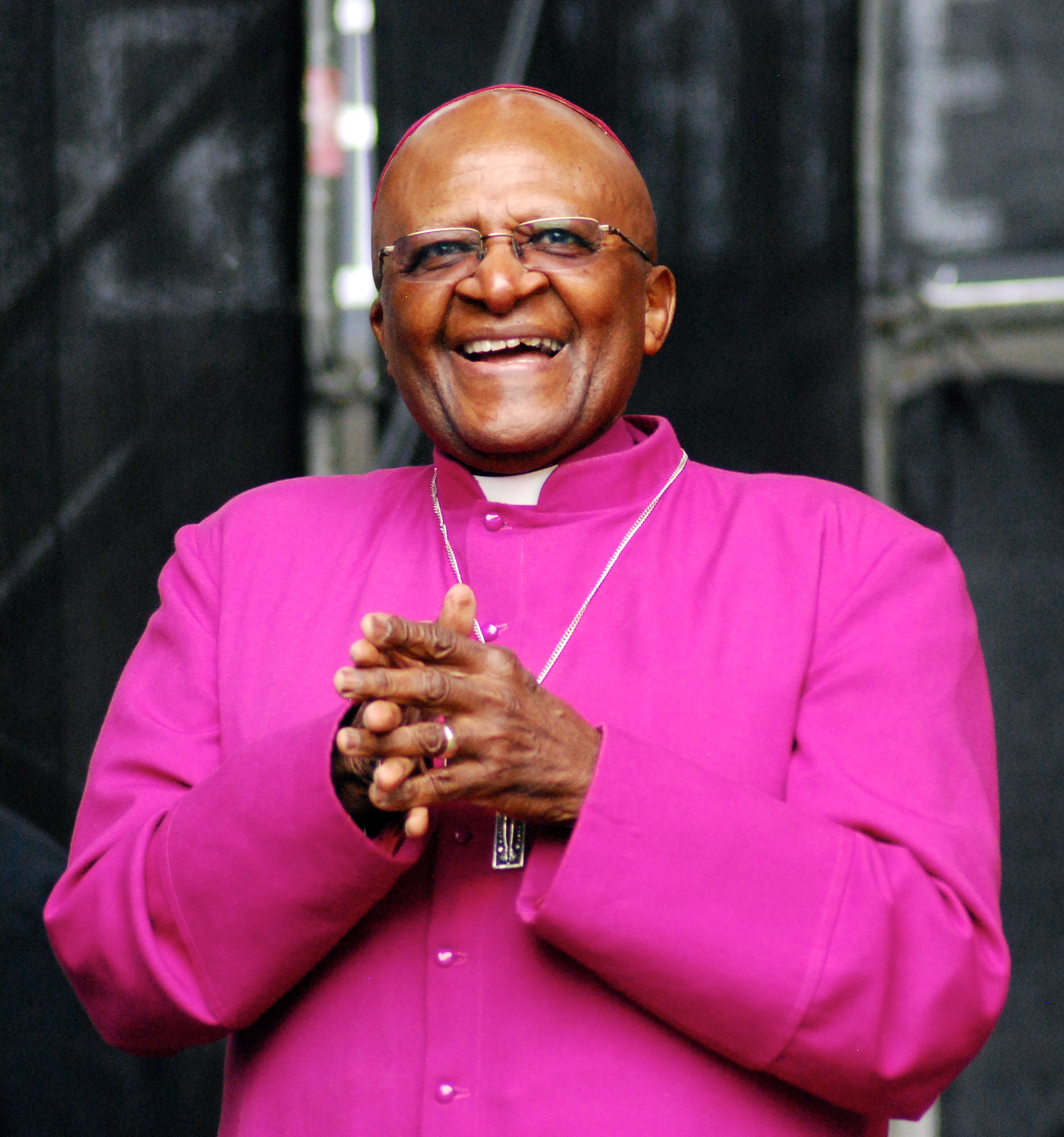
Desmond Tutu was the Archbishop of Cape Town South Africa for over 30 years.  For even longer than that he led the fight against apartheid in South Africa.   Being black in South Africa during that time was a struggle— being black and on the frontlines of that struggle would have no doubt led to suffering and frustration.  He didn’t have an easy life.  Even after apartheid ended in 1994, he continued the hard work of truth telling by leading the Truth and Reconciliation Committee that worked to address the injustices committed during apartheid.  Archbishop Tutu never shied away from hard truths.  Yet I think what he is best known for is his joy, love, hope and his infectious laugh.  At the same time, he made sure to distinguish the hope that he practiced from the sunny optimism the world often associates with the word hope. He said, “I have never been an optimist. I am a prisoner of hope.”

            The Apostle Paul, the author of our 2nd reading, would not have called himself an optimist, but was definitely a proponent of hope.  In his letters, he mentioned hope over 50 times.  In today’s reading he says, “…but we also boast in our sufferings, knowing that suffering produces endurance, and endurance produces character, and character produces hope, and hope does not disappoint us...”  One commentator described this as “chain reaction of grace” because it starts with the fact that we are standing in grace.  Grace is the free, undeserved gift that God has given all of us.  It’s the love that God gives us regardless of whether we deserve it or even want it. We have all been called to stand in grace.

            I have to say that I both love and hate these words of Paul.  I love the idea that suffering can create endurance which would then lead to character and inevitably hope.  I love the idea.  What I am not too fond of is the actual experience of suffering.  I don’t know anyone who is.  It kind of reminds me of that phrase “What doesn’t kill you makes you stronger.”  I have never liked that phrase much either.  Because I have witnessed a lot of suffering that didn’t lead to strength or hope.  Sometimes suffering just leads to anger or depression. 

            It would be easy to say well the difference is that as Christians, we have faith and that enables us to transform our suffering into strength and hope.  Yet I have seen many Christians who can’t make it to the other side of suffering. And it’s not because they weren’t good Christians.  It’s not because they weren’t faithful enough.  Sometimes it’s because the suffering was too intense, too endless. There was no reprieve.  I don’t believe that Christians have some special sauce that enables us to have hope in the midst of pain.  I think our hope is different. 

            You see our hope isn’t based in some idyllic life that we have been promised.  It’s not based merely on what can be. It’s based on what Jesus did for us and what he continues to do for us.  Christian hope is born not in life, but in death, in the death of Jesus Christ.  Jesus suffered in both his life and death.  That suffering is what enabled Jesus to be resurrected and thus enables us all to have new life.  Our hope is different than the hope we might read about in greeting cards and chicken soup for the soul kind of messages. Our hope was forged out of darkness and death. [1] That is why darkness and death cannot defeat Christian hope...because darkness and death---they birthed hope.  That is what makes the hope we have in Jesus so incredibly powerful.

            But here’s the thing, this Christian hope isn’t easy.  Having it doesn’t even make our lives easier. In some ways, life becomes harder with hope.  Esau McCauley, a priest and writer, wrote, “Hope is a demanding emotion that insists on changing you.  Hope pulls you out of yourself and into the world, forcing you to believe more is possible.” [2]

            That’s what Archbishop Tutu meant when he said that he was a “prisoner of hope.” Once that hope took hold of him, he could not give up.  He could not despair.  Despair is a horrible feeling, it really is.  No one would want despair.  Yet while hope is demanding, “despair allows us to give up our resistance and rest.”[3]  That makes being in a state of despair easier because we can stop trying to make the world better….we can stop being aware of the pain and anguish that surrounds us.  We can just stop.  And I have to say, that can be tempting sometimes.  In a world that is broken and in desperate need of repair, it’s tempting to throw our hands up in the air and say, “Well, there is obviously nothing I can do about this, I might as well just stop trying…stop hoping.”

            We think that hope is something that should come to us naturally…but it’s not our natural state.  It’s something we have to work for.  That work can be exhausting.  You might be thinking, that doesn’t sound very good.  If that is what hope is, why would we want it? Why?  Because we Christians stand in grace.   That is God’s gift to us.  It’s our starting point.  And while hope is challenging, it’s also uplifting.  It brings joy.  It is life giving.  It gives us life and it gives those around us life.  Despair, it’s easier because we don’t have to do anything.  We don’t have to face the hard truths or our world. We don’t have to face how even our actions contribute to the despair of others.  But that is not why God put us on this earth.  We are not here to lean into despair.  We have not been given grace so we can squander it.  We, (the church) must be beacons of hope in this dark and lonely world.  We cannot give into the despair or the hate or the apathy. 

            Our Gospel reading says that Jesus saw the crowds and had compassion on them because they were harassed and helpless.   Then he told the disciples, “The harvest is plentiful, but the laborers are few; therefore ask the Lord of the harvest to send out laborers into the harvest.” The harvest is the people who are living in despair, who can’t see out of their despair. Sometimes we are part of the harvest.  There are times, when we all might be in that place.  But there is also a lot of time when we are the laborers, when we are prisoners of hope who can’t possibly give up.  The harvest is plentiful.  Despair and darkness can indeed feel overwhelming.  But never forget that Christian hope was forged in darkness and death, which is what makes it indestructible and impenetrable.  Be a prisoner of hope.  Let hope captivate you.   Whatever is happening in our world, whatever suffering we might encounter, never forget Christianity was created because death was defeated. And that—that is a hope that never disappoints.  


[1] This idea comes from a commentary by Scott Hoezee and can be found here: https://cepreaching.org/commentary/2016-05-16/romans-51-5/

[2] https://www.nytimes.com/2023/04/08/opinion/easter-jesus-judas-hope.html?searchResultPosition=2

[3] https://www.nytimes.com/2023/04/08/opinion/easter-jesus-judas-hope.html?searchResultPosition=2