Showing posts with label Year A Pentecost 3. Show all posts

Sunday, July 26, 2026

Prisoner of Hope: June 14

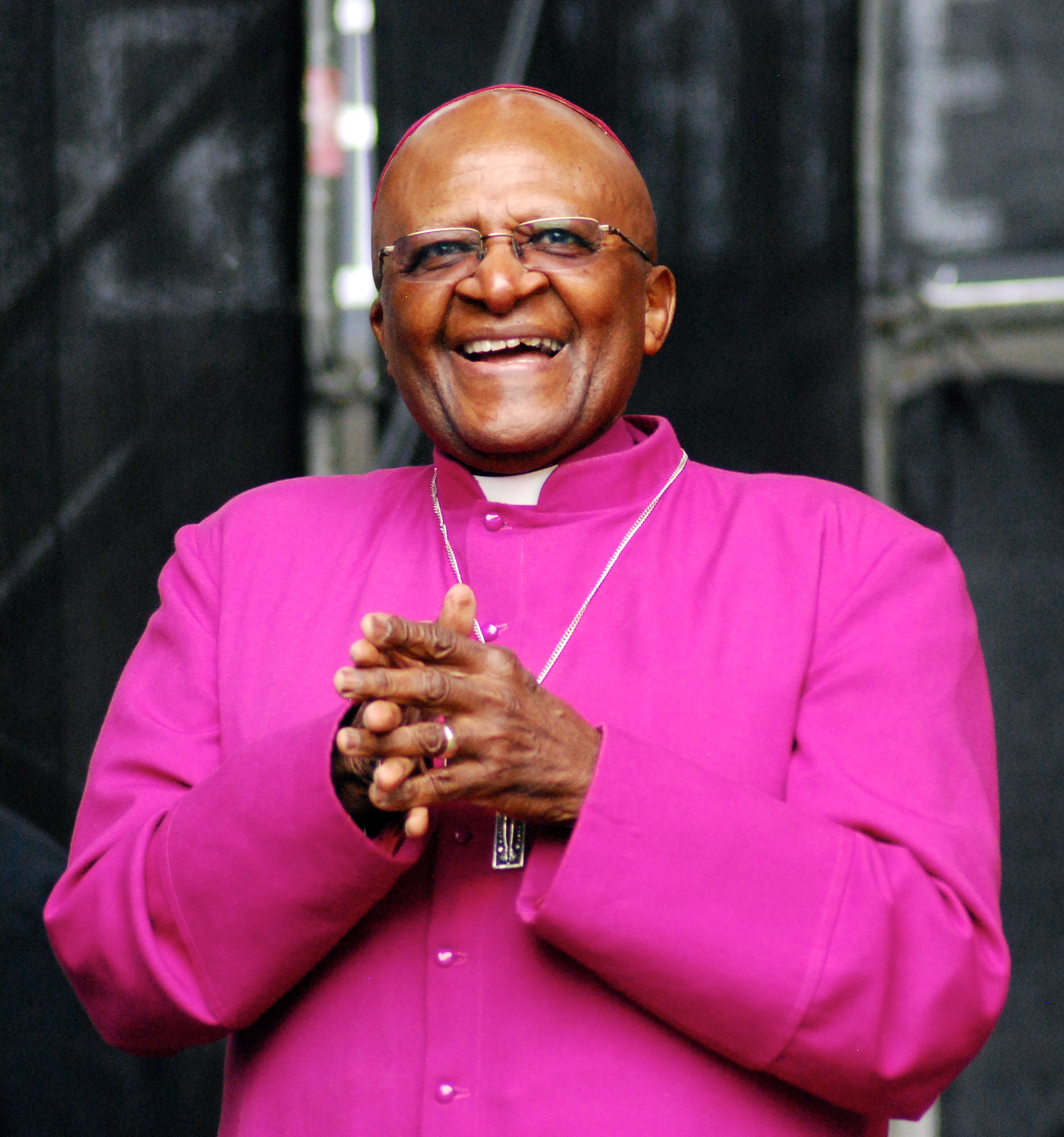
 Year A, Pentecost 3                                                 Romans 5:1-8                                                                     Desmond Tutu was the Archbishop of Cape Town South Africa for over 30 years.  For even longer than that he led the fight against apartheid in South Africa.   Being black in South Africa during that time was a struggle— being black and on the frontlines of that struggle would have no doubt led to suffering and frustration.  He didn’t have an easy life.  Even after apartheid ended in 1994, he continued the hard work of truth telling by leading the Truth and Reconciliation Committee that worked to address the injustices committed during apartheid.  Archbishop Tutu never shied away from hard truths.  Yet I think what he is best known for is his joy, love, hope and his infectious laugh.  At the same time, he made sure to distinguish the hope that he practiced from the sunny optimism the world often associates with the word hope. He said, “I have never been an optimist. I am a prisoner of hope.”

            The Apostle Paul, the author of our 2nd reading, would not have called himself an optimist, but was definitely a proponent of hope.  In his letters, he mentioned hope over 50 times.  In today’s reading he says, “…but we also boast in our sufferings, knowing that suffering produces endurance, and endurance produces character, and character produces hope, and hope does not disappoint us...”  One commentator described this as “chain reaction of grace” because it starts with the fact that we are standing in grace.  Grace is the free, undeserved gift that God has given all of us.  It’s the love that God gives us regardless of whether we deserve it or even want it. We have all been called to stand in grace.

            I have to say that I both love and hate these words of Paul.  I love the idea that suffering can create endurance which would then lead to character and inevitably hope.  I love the idea.  What I am not too fond of is the actual experience of suffering.  I don’t know anyone who is.  It kind of reminds me of that phrase “What doesn’t kill you makes you stronger.”  I have never liked that phrase much either.  Because I have witnessed a lot of suffering that didn’t lead to strength or hope.  Sometimes suffering just leads to anger or depression. 

            It would be easy to say well the difference is that as Christians, we have faith and that enables us to transform our suffering into strength and hope.  Yet I have seen many Christians who can’t make it to the other side of suffering. And it’s not because they weren’t good Christians.  It’s not because they weren’t faithful enough.  Sometimes it’s because the suffering was too intense, too endless. There was no reprieve.  I don’t believe that Christians have some special sauce that enables us to have hope in the midst of pain.  I think our hope is different. 

            You see our hope isn’t based in some idyllic life that we have been promised.  It’s not based merely on what can be. It’s based on what Jesus did for us and what he continues to do for us.  Christian hope is born not in life, but in death, in the death of Jesus Christ.  Jesus suffered in both his life and death.  That suffering is what enabled Jesus to be resurrected and thus enables us all to have new life.  Our hope is different than the hope we might read about in greeting cards and chicken soup for the soul kind of messages. Our hope was forged out of darkness and death.  That is why darkness and death cannot defeat Christian hope...because darkness and death---they birthed hope.  That is what makes the hope we have in Jesus so incredibly powerful.

            But here’s the thing, this Christian hope isn’t easy.  Having it doesn’t even make our lives easier. In some ways, life becomes harder with hope.  Esau McCauley, a priest and writer, wrote, “Hope is a demanding emotion that insists on changing you.  Hope pulls you out of yourself and into the world, forcing you to believe more is possible.”

            That’s what Archbishop Tutu meant when he said that he was a “prisoner of hope.” Once that hope took hold of him, he could not give up.  He could not despair.  Despair is a horrible feeling, it really is.  No one would want despair.  Yet while hope is demanding, “despair allows us to give up our resistance and rest.”  That makes being in a state of despair easier because we can stop trying to make the world better….we can stop being aware of the pain and anguish that surrounds us.  We can just stop.  And I have to say, that can be tempting sometimes.  In a world that is broken and seems intent on breaking our hearts a little more every day, it’s tempting to throw our hands up in the air and say, “Well, there is obviously nothing I can do about this, I might as well just stop trying…stop hoping.”

            We think that hope is something that should come to us naturally…but it’s not our natural state.  It’s something we have to work for.  That work can be exhausting.  You might be thinking, that doesn’t sound very good.  If that is what hope is, why would we want it? Why?  Because we Christians stand in grace.   That is God’s gift to us.  It’s our starting point.  And while hope is challenging, it’s also uplifting.  It brings joy.  It is life giving.  It gives us life and it gives those around us life.  Despair, it’s easier because we don’t have to do anything.  We don’t have to face the hard truths or our world. We don’t have to face how even our actions contribute to the despair of others.  But that is not why God put us on this earth.  We are not here to lean into despair.  We have not been given grace so we can squander it.  We, (the church) must be beacons of hope in this dark and lonely world.  We cannot give into the despair or the hate or the apathy. 

            Our Gospel reading says that Jesus saw the crowds and had compassion on them because they were harassed and helpless.   Then he told the disciples, “The harvest is plentiful, but the laborers are few; therefore ask the Lord of the harvest to send out laborers into the harvest.” The harvest is the people who are living in despair, who can’t see out of their despair. Sometimes we are part of the harvest.  There are times, when we all might be in that place.  But there are also a lot of times when we are the laborers, when we are prisoners of hope who can’t possibly give up.  The harvest is plentiful.  Despair and darkness can indeed feel overwhelming.  But never forget that Christian hope was forged in darkness and death, which is what makes it indestructible and impenetrable.  Be a prisoner of hope.  Let hope captivate you.   Whatever is happening in our world, whatever suffering we might encounter, never forget that we Christians were created to defeat death. 

Monday, June 19, 2023

Prisoner of Hope: June 18, 2023

 Year A, Pentecost 3                                        Romans 5:1-8                                                                       

Desmond Tutu was the Archbishop of Cape Town South Africa for over 30 years.  For even longer than that he led the fight against apartheid in South Africa.   Being black in South Africa during that time was a struggle— being black and on the frontlines of that struggle would have no doubt led to suffering and frustration.  He didn’t have an easy life.  Even after apartheid ended in 1994, he continued the hard work of truth telling by leading the Truth and Reconciliation Committee that worked to address the injustices committed during apartheid.  Archbishop Tutu never shied away from hard truths.  Yet I think what he is best known for is his joy, love, hope and his infectious laugh.  At the same time, he made sure to distinguish the hope that he practiced from the sunny optimism the world often associates with the word hope. He said, “I have never been an optimist. I am a prisoner of hope.”

            The Apostle Paul, the author of our 2nd reading, would not have called himself an optimist, but was definitely a proponent of hope.  In his letters, he mentioned hope over 50 times.  In today’s reading he says, “…but we also boast in our sufferings, knowing that suffering produces endurance, and endurance produces character, and character produces hope, and hope does not disappoint us...”  One commentator described this as “chain reaction of grace” because it starts with the fact that we are standing in grace.  Grace is the free, undeserved gift that God has given all of us.  It’s the love that God gives us regardless of whether we deserve it or even want it. We have all been called to stand in grace.

            I have to say that I both love and hate these words of Paul.  I love the idea that suffering can create endurance which would then lead to character and inevitably hope.  I love the idea.  What I am not too fond of is the actual experience of suffering.  I don’t know anyone who is.  It kind of reminds me of that phrase “What doesn’t kill you makes you stronger.”  I have never liked that phrase much either.  Because I have witnessed a lot of suffering that didn’t lead to strength or hope.  Sometimes suffering just leads to anger or depression. 

            It would be easy to say well the difference is that as Christians, we have faith and that enables us to transform our suffering into strength and hope.  Yet I have seen many Christians who can’t make it to the other side of suffering. And it’s not because they weren’t good Christians.  It’s not because they weren’t faithful enough.  Sometimes it’s because the suffering was too intense, too endless. There was no reprieve.  I don’t believe that Christians have some special sauce that enables us to have hope in the midst of pain.  I think our hope is different. 

            You see our hope isn’t based in some idyllic life that we have been promised.  It’s not based merely on what can be. It’s based on what Jesus did for us and what he continues to do for us.  Christian hope is born not in life, but in death, in the death of Jesus Christ.  Jesus suffered in both his life and death.  That suffering is what enabled Jesus to be resurrected and thus enables us all to have new life.  Our hope is different than the hope we might read about in greeting cards and chicken soup for the soul kind of messages. Our hope was forged out of darkness and death. [1] That is why darkness and death cannot defeat Christian hope...because darkness and death---they birthed hope.  That is what makes the hope we have in Jesus so incredibly powerful.

            But here’s the thing, this Christian hope isn’t easy.  Having it doesn’t even make our lives easier. In some ways, life becomes harder with hope.  Esau McCauley, a priest and writer, wrote, “Hope is a demanding emotion that insists on changing you.  Hope pulls you out of yourself and into the world, forcing you to believe more is possible.” [2]

            That’s what Archbishop Tutu meant when he said that he was a “prisoner of hope.” Once that hope took hold of him, he could not give up.  He could not despair.  Despair is a horrible feeling, it really is.  No one would want despair.  Yet while hope is demanding, “despair allows us to give up our resistance and rest.”[3]  That makes being in a state of despair easier because we can stop trying to make the world better….we can stop being aware of the pain and anguish that surrounds us.  We can just stop.  And I have to say, that can be tempting sometimes.  In a world that is broken and in desperate need of repair, it’s tempting to throw our hands up in the air and say, “Well, there is obviously nothing I can do about this, I might as well just stop trying…stop hoping.”

            We think that hope is something that should come to us naturally…but it’s not our natural state.  It’s something we have to work for.  That work can be exhausting.  You might be thinking, that doesn’t sound very good.  If that is what hope is, why would we want it? Why?  Because we Christians stand in grace.   That is God’s gift to us.  It’s our starting point.  And while hope is challenging, it’s also uplifting.  It brings joy.  It is life giving.  It gives us life and it gives those around us life.  Despair, it’s easier because we don’t have to do anything.  We don’t have to face the hard truths or our world. We don’t have to face how even our actions contribute to the despair of others.  But that is not why God put us on this earth.  We are not here to lean into despair.  We have not been given grace so we can squander it.  We, (the church) must be beacons of hope in this dark and lonely world.  We cannot give into the despair or the hate or the apathy. 

            Our Gospel reading says that Jesus saw the crowds and had compassion on them because they were harassed and helpless.   Then he told the disciples, “The harvest is plentiful, but the laborers are few; therefore ask the Lord of the harvest to send out laborers into the harvest.” The harvest is the people who are living in despair, who can’t see out of their despair. Sometimes we are part of the harvest.  There are times, when we all might be in that place.  But there is also a lot of time when we are the laborers, when we are prisoners of hope who can’t possibly give up.  The harvest is plentiful.  Despair and darkness can indeed feel overwhelming.  But never forget that Christian hope was forged in darkness and death, which is what makes it indestructible and impenetrable.  Be a prisoner of hope.  Let hope captivate you.   Whatever is happening in our world, whatever suffering we might encounter, never forget Christianity was created because death was defeated. And that—that is a hope that never disappoints.  


[1] This idea comes from a commentary by Scott Hoezee and can be found here: https://cepreaching.org/commentary/2016-05-16/romans-51-5/

[2] https://www.nytimes.com/2023/04/08/opinion/easter-jesus-judas-hope.html?searchResultPosition=2

[3] https://www.nytimes.com/2023/04/08/opinion/easter-jesus-judas-hope.html?searchResultPosition=2


Sunday, June 25, 2017

A different story: June 25, 2017

Year A, Pentecost 3                                                   
Genesis 21:8-21                                                                                 
 
            The story of Hagar, Sarah, and Abraham is complicated.    Normally when we talk about Abraham and Sarah, we talk about their faithfulness and their holiness.  God blessed them throughout their lives and promised a great nation from their descendants.  Unfortunately Sarah could not conceive a child in a time when a woman’s worth was dependent on her ability to have children.  Abraham and Sarah waited for decades, believing in God’s promise.  While God never wavered from this promise, it took a really long time to be fulfilled. Sarah decided that they needed to take God’s plan into their own hands.  Obviously God was not going to give her a child, so she decided that she would make it happen another way. 

Here is where it got complicated.  She told her husband to take a slave as his concubine, so that this slave could bear Abraham’s children and begin this great nation.  Abraham, being a dutiful husband, did as she asked.  While this sounds pretty horrible to us now, this was common practice for people in this day.  Abraham was a man of prominence.  Men of his standing and status had big families.  It was another sign of prosperity.   There was also that whole…father of a great nation thing.  How would that happen without children? Feeling powerless and frustrated, Sarah did what she had to do. 

While it was not  considered sinful at this time, for a man to take another wife, it wasn’t the plan that God had for them.  God’s plan was that Sarah would bear a child who would be Abraham’s heir. But no one can blame Sarah for doubting this at the age of 90. If God’s plan was for her to bear a child, it would have surely happened by now.  Her solution was a practical one and it worked….initially.  Hagar (the slave) became pregnant.  But before she even gave birth, Sarah regretted her decision and abused her so much that Hagar ran away.  If you put this in a modern context, it would sound like a horrible reality TV show that went a little too far.

            At this point, things looked pretty bad for all involved.  Hagar was abused and forced to flee.  Sarah was still childless and even more bitter than before. Abraham seemed to be caught in the middle and unable to show any moral backbone.  Thankfully, God stepped in. He found Hagar in the wilderness.  He comforted her by telling her, “I will so greatly multiply your offspring that they cannot be counted for multitude.” He also told her to return to Sarah.  While this was not the news I would have wanted, “return to the person who is abusing you,” there was reassurance in more than just God’s words.  God appeared to Hagar.  She named God, “God who sees” because not only did God see her, she saw God, which is amazing.  In that time, no one saw God and lived.  Perhaps this is what gave her the strength to return to a hostile household.  Despite Sarah’s behavior, Abraham was still the father.  God even told her what to name her son.  It was to be Ishmael, which means, “he hears.”

            We do not hear any more about Hagar until our story for today.  Clearly the relationship between Sarah and Hagar has not improved.  Even after Sarah bore a son—the child that had been promised for so long--there was still jealousy. In addition to that, Sarah seemed afraid for her son.  Abraham and Sarah were wealthy in land and livestock.  Their firstborn son would inherit quite a lot.  Not only that, but their first born was the beginning of this great nation that God had promised them.  It was supposed to be her son, not Hagar’s son. 

Sarah asked Abraham to force Hagar and her son out.  Abraham was torn, but God told him to listen to his wife. This particular part is what a lot of people struggle with.  Abraham and Sarah are humans. They are flawed humans.  While Sarah’s actions are cruel, they are understandable to some extent.  What seems worrisome is that God would support Sarah’s decision.  In forcing Hagar and her son into the desert with meager provisions, there was a good chance they would die, or at least suffer a great deal.  It seems an odd thing for God to support.  But there was something else God said to Abraham besides just “listen to your wife.”  He said, “I will make a nation of him also, because he is your offspring.”  In those words, there is an implicit promise that God would care for Hagar and Ismael.

            He did.  When their water was gone and death loomed in front of them, God heard the voice of the boy and spoke to Hagar again.  It is interesting that the text says that God heard the voice of the boy.  Ishmael wasn’t the one making the noise; that was his mother who was weeping and crying out. However, remember that the last time Hagar was out in the wilderness scared and helpless, God told her to name her son Ishmael which means “God hears.”  In naming her son, God promised that he would always hear his cries, even when he was too weak to cry out loud, God would hear him.  Remember also that Hagar had named God, “God sees.” In this story, not only does God hear and see, he helps Hagar to see.  He opens her eyes so she can see a spring of fresh water.  He opens her eyes and gives her the vision and the courage to keep going.  Even though she has been abandoned by everyone, God is still listening, still seeing. 

            There is a lot of debate about whether God plans our whole lives…meaning everything that happens ---happens because God wants it to happen that way. However, I am not sure this story of Hagar was part of God’s original plan. God did not want Abraham to take on a concubine.  He certainly did not want Sarah to abuse the concubine and then years later throw her and her son out to die.  God’s initial plan was that Abraham would be the father of a great nation and this great nation would begin with Isaac, the son of Abraham and Sarah.  That was what happened. 

But along the way, God had to create another plan to accommodate human’s need to take control of our own story.  God did not just create another plan, he created another story, of another nation—a great nation. God promised this to Hagar years before in the wilderness and he promised it again in our story for today.  Human sin can never forfeit God’s plans.  Sometimes it just creates more plans, more stories.  We don’t know all the stories because the Bible cannot tell all the stories, but it does not mean those stories are not out there. 

            It is the same in our lives.  We all have a story that we begin with. It is either a story we are told, or a story we develop about how our life is supposed to turn out.  But it never turns out that way does it?  It does not mean that God did not like that story.  It’s just that things shift in our lives, sometimes because of our decisions and sometimes because of things that we have no control over.  While that can be frustrating and at times discouraging, God is always there, willing to create a new and different story with us.  In the end, it’s not really about the details of our stories that matters. It’s about how we live those stories and how we welcome God into our stories.