Showing posts with label hope. Show all posts

Sunday, July 26, 2026

Prisoner of Hope: June 14

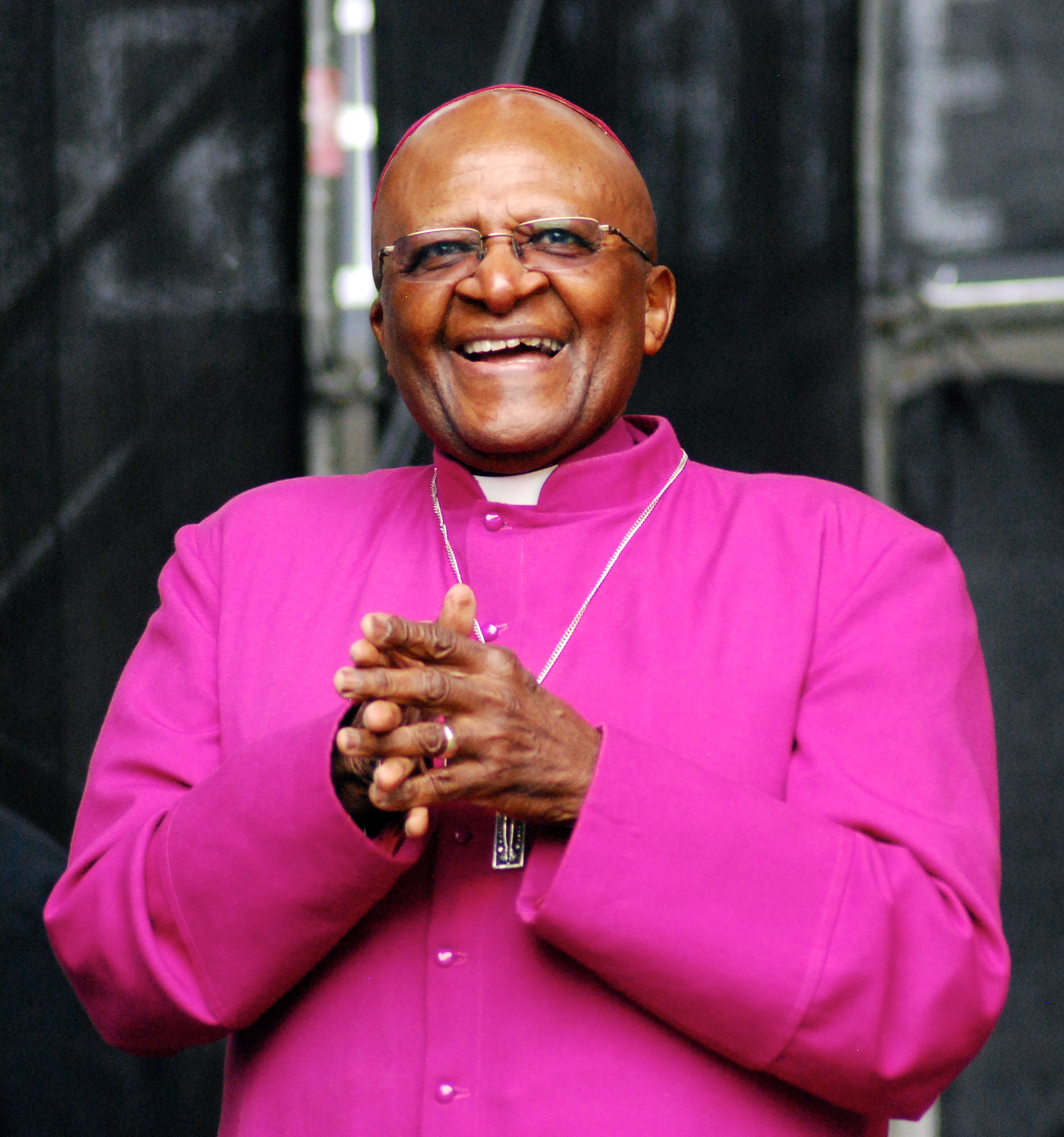
 Year A, Pentecost 3                                                 Romans 5:1-8                                                                     Desmond Tutu was the Archbishop of Cape Town South Africa for over 30 years.  For even longer than that he led the fight against apartheid in South Africa.   Being black in South Africa during that time was a struggle— being black and on the frontlines of that struggle would have no doubt led to suffering and frustration.  He didn’t have an easy life.  Even after apartheid ended in 1994, he continued the hard work of truth telling by leading the Truth and Reconciliation Committee that worked to address the injustices committed during apartheid.  Archbishop Tutu never shied away from hard truths.  Yet I think what he is best known for is his joy, love, hope and his infectious laugh.  At the same time, he made sure to distinguish the hope that he practiced from the sunny optimism the world often associates with the word hope. He said, “I have never been an optimist. I am a prisoner of hope.”

            The Apostle Paul, the author of our 2nd reading, would not have called himself an optimist, but was definitely a proponent of hope.  In his letters, he mentioned hope over 50 times.  In today’s reading he says, “…but we also boast in our sufferings, knowing that suffering produces endurance, and endurance produces character, and character produces hope, and hope does not disappoint us...”  One commentator described this as “chain reaction of grace” because it starts with the fact that we are standing in grace.  Grace is the free, undeserved gift that God has given all of us.  It’s the love that God gives us regardless of whether we deserve it or even want it. We have all been called to stand in grace.

            I have to say that I both love and hate these words of Paul.  I love the idea that suffering can create endurance which would then lead to character and inevitably hope.  I love the idea.  What I am not too fond of is the actual experience of suffering.  I don’t know anyone who is.  It kind of reminds me of that phrase “What doesn’t kill you makes you stronger.”  I have never liked that phrase much either.  Because I have witnessed a lot of suffering that didn’t lead to strength or hope.  Sometimes suffering just leads to anger or depression. 

            It would be easy to say well the difference is that as Christians, we have faith and that enables us to transform our suffering into strength and hope.  Yet I have seen many Christians who can’t make it to the other side of suffering. And it’s not because they weren’t good Christians.  It’s not because they weren’t faithful enough.  Sometimes it’s because the suffering was too intense, too endless. There was no reprieve.  I don’t believe that Christians have some special sauce that enables us to have hope in the midst of pain.  I think our hope is different. 

            You see our hope isn’t based in some idyllic life that we have been promised.  It’s not based merely on what can be. It’s based on what Jesus did for us and what he continues to do for us.  Christian hope is born not in life, but in death, in the death of Jesus Christ.  Jesus suffered in both his life and death.  That suffering is what enabled Jesus to be resurrected and thus enables us all to have new life.  Our hope is different than the hope we might read about in greeting cards and chicken soup for the soul kind of messages. Our hope was forged out of darkness and death.  That is why darkness and death cannot defeat Christian hope...because darkness and death---they birthed hope.  That is what makes the hope we have in Jesus so incredibly powerful.

            But here’s the thing, this Christian hope isn’t easy.  Having it doesn’t even make our lives easier. In some ways, life becomes harder with hope.  Esau McCauley, a priest and writer, wrote, “Hope is a demanding emotion that insists on changing you.  Hope pulls you out of yourself and into the world, forcing you to believe more is possible.”

            That’s what Archbishop Tutu meant when he said that he was a “prisoner of hope.” Once that hope took hold of him, he could not give up.  He could not despair.  Despair is a horrible feeling, it really is.  No one would want despair.  Yet while hope is demanding, “despair allows us to give up our resistance and rest.”  That makes being in a state of despair easier because we can stop trying to make the world better….we can stop being aware of the pain and anguish that surrounds us.  We can just stop.  And I have to say, that can be tempting sometimes.  In a world that is broken and seems intent on breaking our hearts a little more every day, it’s tempting to throw our hands up in the air and say, “Well, there is obviously nothing I can do about this, I might as well just stop trying…stop hoping.”

            We think that hope is something that should come to us naturally…but it’s not our natural state.  It’s something we have to work for.  That work can be exhausting.  You might be thinking, that doesn’t sound very good.  If that is what hope is, why would we want it? Why?  Because we Christians stand in grace.   That is God’s gift to us.  It’s our starting point.  And while hope is challenging, it’s also uplifting.  It brings joy.  It is life giving.  It gives us life and it gives those around us life.  Despair, it’s easier because we don’t have to do anything.  We don’t have to face the hard truths or our world. We don’t have to face how even our actions contribute to the despair of others.  But that is not why God put us on this earth.  We are not here to lean into despair.  We have not been given grace so we can squander it.  We, (the church) must be beacons of hope in this dark and lonely world.  We cannot give into the despair or the hate or the apathy. 

            Our Gospel reading says that Jesus saw the crowds and had compassion on them because they were harassed and helpless.   Then he told the disciples, “The harvest is plentiful, but the laborers are few; therefore ask the Lord of the harvest to send out laborers into the harvest.” The harvest is the people who are living in despair, who can’t see out of their despair. Sometimes we are part of the harvest.  There are times, when we all might be in that place.  But there are also a lot of times when we are the laborers, when we are prisoners of hope who can’t possibly give up.  The harvest is plentiful.  Despair and darkness can indeed feel overwhelming.  But never forget that Christian hope was forged in darkness and death, which is what makes it indestructible and impenetrable.  Be a prisoner of hope.  Let hope captivate you.   Whatever is happening in our world, whatever suffering we might encounter, never forget that we Christians were created to defeat death. 

Monday, June 19, 2023

Prisoner of Hope: June 18, 2023

 Year A, Pentecost 3                                        Romans 5:1-8                                                                       

Desmond Tutu was the Archbishop of Cape Town South Africa for over 30 years.  For even longer than that he led the fight against apartheid in South Africa.   Being black in South Africa during that time was a struggle— being black and on the frontlines of that struggle would have no doubt led to suffering and frustration.  He didn’t have an easy life.  Even after apartheid ended in 1994, he continued the hard work of truth telling by leading the Truth and Reconciliation Committee that worked to address the injustices committed during apartheid.  Archbishop Tutu never shied away from hard truths.  Yet I think what he is best known for is his joy, love, hope and his infectious laugh.  At the same time, he made sure to distinguish the hope that he practiced from the sunny optimism the world often associates with the word hope. He said, “I have never been an optimist. I am a prisoner of hope.”

            The Apostle Paul, the author of our 2nd reading, would not have called himself an optimist, but was definitely a proponent of hope.  In his letters, he mentioned hope over 50 times.  In today’s reading he says, “…but we also boast in our sufferings, knowing that suffering produces endurance, and endurance produces character, and character produces hope, and hope does not disappoint us...”  One commentator described this as “chain reaction of grace” because it starts with the fact that we are standing in grace.  Grace is the free, undeserved gift that God has given all of us.  It’s the love that God gives us regardless of whether we deserve it or even want it. We have all been called to stand in grace.

            I have to say that I both love and hate these words of Paul.  I love the idea that suffering can create endurance which would then lead to character and inevitably hope.  I love the idea.  What I am not too fond of is the actual experience of suffering.  I don’t know anyone who is.  It kind of reminds me of that phrase “What doesn’t kill you makes you stronger.”  I have never liked that phrase much either.  Because I have witnessed a lot of suffering that didn’t lead to strength or hope.  Sometimes suffering just leads to anger or depression. 

            It would be easy to say well the difference is that as Christians, we have faith and that enables us to transform our suffering into strength and hope.  Yet I have seen many Christians who can’t make it to the other side of suffering. And it’s not because they weren’t good Christians.  It’s not because they weren’t faithful enough.  Sometimes it’s because the suffering was too intense, too endless. There was no reprieve.  I don’t believe that Christians have some special sauce that enables us to have hope in the midst of pain.  I think our hope is different. 

            You see our hope isn’t based in some idyllic life that we have been promised.  It’s not based merely on what can be. It’s based on what Jesus did for us and what he continues to do for us.  Christian hope is born not in life, but in death, in the death of Jesus Christ.  Jesus suffered in both his life and death.  That suffering is what enabled Jesus to be resurrected and thus enables us all to have new life.  Our hope is different than the hope we might read about in greeting cards and chicken soup for the soul kind of messages. Our hope was forged out of darkness and death. [1] That is why darkness and death cannot defeat Christian hope...because darkness and death---they birthed hope.  That is what makes the hope we have in Jesus so incredibly powerful.

            But here’s the thing, this Christian hope isn’t easy.  Having it doesn’t even make our lives easier. In some ways, life becomes harder with hope.  Esau McCauley, a priest and writer, wrote, “Hope is a demanding emotion that insists on changing you.  Hope pulls you out of yourself and into the world, forcing you to believe more is possible.” [2]

            That’s what Archbishop Tutu meant when he said that he was a “prisoner of hope.” Once that hope took hold of him, he could not give up.  He could not despair.  Despair is a horrible feeling, it really is.  No one would want despair.  Yet while hope is demanding, “despair allows us to give up our resistance and rest.”[3]  That makes being in a state of despair easier because we can stop trying to make the world better….we can stop being aware of the pain and anguish that surrounds us.  We can just stop.  And I have to say, that can be tempting sometimes.  In a world that is broken and in desperate need of repair, it’s tempting to throw our hands up in the air and say, “Well, there is obviously nothing I can do about this, I might as well just stop trying…stop hoping.”

            We think that hope is something that should come to us naturally…but it’s not our natural state.  It’s something we have to work for.  That work can be exhausting.  You might be thinking, that doesn’t sound very good.  If that is what hope is, why would we want it? Why?  Because we Christians stand in grace.   That is God’s gift to us.  It’s our starting point.  And while hope is challenging, it’s also uplifting.  It brings joy.  It is life giving.  It gives us life and it gives those around us life.  Despair, it’s easier because we don’t have to do anything.  We don’t have to face the hard truths or our world. We don’t have to face how even our actions contribute to the despair of others.  But that is not why God put us on this earth.  We are not here to lean into despair.  We have not been given grace so we can squander it.  We, (the church) must be beacons of hope in this dark and lonely world.  We cannot give into the despair or the hate or the apathy. 

            Our Gospel reading says that Jesus saw the crowds and had compassion on them because they were harassed and helpless.   Then he told the disciples, “The harvest is plentiful, but the laborers are few; therefore ask the Lord of the harvest to send out laborers into the harvest.” The harvest is the people who are living in despair, who can’t see out of their despair. Sometimes we are part of the harvest.  There are times, when we all might be in that place.  But there is also a lot of time when we are the laborers, when we are prisoners of hope who can’t possibly give up.  The harvest is plentiful.  Despair and darkness can indeed feel overwhelming.  But never forget that Christian hope was forged in darkness and death, which is what makes it indestructible and impenetrable.  Be a prisoner of hope.  Let hope captivate you.   Whatever is happening in our world, whatever suffering we might encounter, never forget Christianity was created because death was defeated. And that—that is a hope that never disappoints.  


[1] This idea comes from a commentary by Scott Hoezee and can be found here: https://cepreaching.org/commentary/2016-05-16/romans-51-5/

[2] https://www.nytimes.com/2023/04/08/opinion/easter-jesus-judas-hope.html?searchResultPosition=2

[3] https://www.nytimes.com/2023/04/08/opinion/easter-jesus-judas-hope.html?searchResultPosition=2


Monday, April 24, 2023

Why are we shooting each other? April 23


Year A, Easter 3                                            Luke 24:13-35                                                             

         In the past week, there have been 4 incidents of people being shot for being in the wrong place and being a stranger.  The first was a 16 year old boy who knocked on the wrong door.  He was shot twice. The 2nd was a 6 year old and her father who went to retrieve a basketball that had rolled into someone’s yard.  The third was a young woman who drove into the wrong driveway. She died. The fourth incident involved two high school girls who accidentally got into the wrong car and were immediately shot.  One week.  One young woman killed and 5 injured for making a mistake that everyone of us has probably made.  How many of us have knocked on the door of the wrong house, drove into the wrong driveway, walked into someone’s yard to retrieve a ball or tried to open the door of a car that looked like yours? I have done all of those things.

These were all different areas of the country. The victims were all young, but that was really all they had in common.  The perpetrators all seemed to have little in common as well.  It seems to me that the only common denominator is fear, particularly fear of strangers. None of the victims were known to those who did the shooting. 

What I want to know is how we got to this point, where 4 different people thought the best thing to do was not simply ask a question and take 10 seconds to find out why the person was in the wrong place, but instead, shoot the people.  How did we get to this place? 

            One of the interesting things about the resurrection accounts is that the disciples of Jesus never recognized him, not at first.  He was always a stranger to them.  It is not clear as to why his closest friends and disciples didn’t recognize him.  Some hypothesize that it was a kind of post traumatic stress.  And that makes sense when you think about it.  Listen to what Simon and Cleopas told Jesus, “But we had hoped that he was the one to redeem Israel.”  Jesus had been their chance at redemption and freedom and now he has been killed by the very people who he was supposed to free them from, the Romans.  They had hoped.  They had put all their hope in this man, and now he was dead. 

They were coping with two kinds of trauma—the violent death of someone who they loved and a lost hope.   Anytime someone we love dies, we experience a tremendous loss.  Sometimes that comes with losing hope—hope for a future with someone who is no longer living with us.  Yet Jesus had promised more than just a future with him, he had promised salvation and freedom. He had promised redemption and healing to all people.  When he was killed, people were terrified that all those promises were lost.  It was a trauma of epic proportions.  Embedded in trauma is fear, fear of what will happen next, knowledge that while we may have survived this trauma, we may not survive the next.  Fear is what made it so difficult to recognize Jesus—to believe that it could be Jesus.

On Easter, I talked about Mary Magdalene’s relative lack of fear. I hypothesized that she was able to handle her fear because of the afflictions she had coped with in her life. She didn’t recognize Jesus immediately, but it didn’t take her very long. It took longer for the men in our Gospel reading. I think these two men who met Jesus on the road had a little more fear than Mary did.  This is the first time we even hear their names, so they probably didn’t have as close a relationship with Jesus as Mary and the apostles.  And they were heading away from Jerusalem.  They were basically fleeing the scene.  They were scared. 

So it took them longer, longer to recognize Jesus, longer to remember that hope that they once had.  But they eventually did.  They did because they spent time with him, listened to him, got to know this man who they thought was a stranger.  The more time they spent with him, the less fear they had.  The reason they were able to overcome that fear was because hope was still there. They might have lost their hope for a time, but they never forgot it.  It was that foundation of hope that saved them.

To some varying degree, almost every person in our world is dealing with some  kind of trauma, which means that everyone is afraid.  Not only that, we have become isolated.  It was happening before the pandemic and then COVID made it that much worse.  We also have this wonderful 24 hours news cycle that seems to feed off of fear, which really isn’t helping matters. 

So what’s different now? Why are people so quick to shoot the stranger in front of them?  Part of it is because we have become isolated and it’s easy to avoid people who are different than us.  Many people are able to avoid interacting with anyone not like them. It’s also because fewer and fewer people have the foundation of hope that our faith gives us.  It’s one thing to deal with fear and loss when you have a foundation of hope and love.  It’s another thing to deal with that when you have no hope to begin with.  That is much more dangerous.

Everything that has happened over the last week (and the last several years) makes me angry. It makes me want to lash out and blame someone or something.  That is what a lot of people are doing. But that just feeds the fear and hopelessness.  Jon Meacham wrote: “Fear points at others, assigning blame; hope points ahead, working for a common good. Fear pushes away; hope pulls others closer. Fear divides; hope unifies.”

As people of faith, we cannot allow ourselves to fear the stranger and to blame the other.  We can’t isolate ourselves in our safe places of hope and comfort.  We have to share this hope that God has given us.  Because people are starving for hope in our world and that dearth of hope is killing people.  It is literally killing people.  What can we do?  We can stop blaming the other political party.  We can stop blaming “the other.” We can stop letting fear be our guide when we have a much better guide in Jesus Christ. 

Notice that Jesus walked with the disciples and they walked WITH him, even though they thought he was a stranger.  In the same way, we can start walking along others, even the people who may scare us a little.  I am not telling you to start knocking on strangers doors, but there are safe ways that you can get to know people who are different than you.  If you aren’t quite ready for that, try to talk to the people who you know—who you know but might not agree with, and talk about those things. We are so busy avoiding talking about things that upset us, but it means we are no longer able to understand where others might be coming from.  That means that even people we know are becoming strangers. 

One of my favorite psalms is Psalm 139.  Lord you have searched me and known me.  It’s all about the God who knows us so well because he formed our inward parts.  It’s a gift to be known and loved by God.  Being known by an all loving being is what gives Christians the strength to deal with trauma and pain. And guess what, it’s not just us who God knows.  God knows all his children.  So think about that the next time you see someone who makes you a little nervous, a little wary.  Remember they too are created in God’s image. For God, there are no strangers. 

Tuesday, December 24, 2019

Mr. Rogers and Isaiah: December 8, 2019


Year A, Advent 2                                                              
Isaiah 11:1-11                                                                                 

            Lately my son has been talking a lot about good guys and bad guys (mostly bad guys).  Not only do humans fall into these categories, but animals do as well. Once we were playing a game where we were running from a lion.  Joshua decided to shoot the lion.  We don’t let Joshua have toy guns, but he can make anything into a gun.  I explained to him that I didn’t want him shooting a lion.  He replied, “But lions are mean.”  I then tried to explain to him that while lions are dangerous, they are not innately bad.  We then had to discuss whether there would be any circumstance where shooting a lion would be appropriate and it all got very muddy.  I decided perhaps we should avoid a safari for a family vacation.     I have noticed that in most popular children’s shows and almost all movies, there is always a bad guy or bad animal.  I guess it makes things interesting for a young mind.  But it makes me sad that at the age of 3, my son is already categorizing people into good and bad and thinking about injuring people and dangerous animals.  I have attempted to explain to him that God created us all good, but so far, that’s just not working.  If a 3 year old is already programmed to perceive people as good and bad and talk about shooting people, imagine how we adults have been programmed. Even if we intellectually have moved past that, it’s still there in the back of our minds lurking, like an unwanted intruder. 
            This reading from Isaiah (our first reading) is often referred to as “the Peaceable Kingdom.”  It’s a beautiful and poetic passage with a moving message. There are many works of art modeled after the image that Isaiah paints.  The reading from Isaiah last week was another famous passage.  It read: “They shall beat their swords into ploughshares, and their spears into pruning-hooks; nation shall not lift up sword against nation, neither shall they learn war any more.” That passage is about peace between the nations, which is a fairly lofty dream.         This week the dream seems even more unfathomable.  “The wolf shall live with the lamb, the leopard shall lie down with the kid, the calf and the lion and the fatling together, and a little child shall lead them.” Instead of peace between the nations, Isaiah is now envisioning peace within nature. All the animals are vegetarians.  The laws of evolution are basically tossed out. There is no longer survival of the fittest.  Every person—every animal—survives and lives together in harmony. It’s basically the Garden of Eden before the fall.  It’s a place where there are no good or bad people.  There are no good or bad animals.  All are just as God intended, inherently and permanently good.  
            This is the image that should be planted in our children’s mind. I’m not saying we should shelter them from all that is bad.  We can’t.  But it’s like we don’t even try to create this peaceable kingdom in our books or our movies.  It’s not even worth dreaming about or imagining.  That’s a sad thing.  It means that not only has hope died, but the dream that carried the hope is buried under our low expectations.    You might think, well that’s just too depressing. There is no point in dreaming or hoping for something that cannot be.  Isaiah didn’t think so when he wrote this text.  And if you think that the prophet Isaiah was some kind of Pollyanna, just read virtually any chapter in the book of Isaiah and you will see that this guy was living in a very precarious situation.  He was living in a land about to be invaded, preaching to a people who were miserable, angry, and scared.  It wasn’t exactly a utopian paradise. Isaiah called for repentance and spoke of the need for change.  He spoke the truth, even when it was unpopular. Yet in the midst of his dire warnings about the fate of Israel, he stopped and painted pictures like the one we heard today, a picture of the peaceable kingdom.  He wanted people to remember that God’s vision for our world was audacious and bold.  It wasn’t just meant to be a dream or vision but a reality, a goal to strive for. 
            Therefore, we can never stop painting these pictures, telling these stories of goodness and peace.  You might think, “That’s not effective. Then you’re just living in a fantasy.” However, consider the resurgence of Mr. Rogers. There are books about him, a documentary and now a film starring Tom Hanks.  Mr. Rogers didn’t fight bad guys.  He was just good.  He created a world of make believe where animals and people lived alongside one another in peace and harmony. He invited people into that world so they could see glimpse of what could be.  And he did more than just provide a dreamscape.        
         In the late 1960’s racial tension in America was high.  Martin Luther King was assassinated in 1968 and race riots followed.  Segregation was technically illegal, but many places were still not integrated. One of those places was public pools.  Near the one year anniversary of Martin Luther King’s death, Mr. Rogers invited one of his neighbors over, a friendly black police officer.  They decided to cool their feet in a plastic kiddie pool.  Then they shared a towel.  Mr. Rogers never said a word about integration or race relations, but the image was clear. This is the peaceable kingdom.
What is amazing about that image is that when we look at it now, we don’t see anything remarkable about a white man and black man sitting beside one another with their feet in the same water.  That’s because it’s our new normal.  I’m not saying we have eradicated racism, we have a long way to go. But we have made progress.  We’re swimming in the same water now.  I’m not saying Mr. Rogers fixed the problem single handedly.  Many of our African American brothers and sisters suffered and died in that fight. But, it played a small part.
            Most of the time, a small part is the best we can do.  Yet we fear even doing that because we think, it won’t make any difference.  Despite everything Mr. Rogers accomplished in his life, he still wondered if he made any difference at all. But  we know he did.  On Friday, the church commemorated the life of St. Nickolas.  We do every year on December 6th.  He was a bishop and probably attended the Council of Nicea, which was a big deal.   But what he is remembered for his kindness toward strangers in need. The church is not just hear to worship God serve others.  We are also hear to support one another be the people who God created us to be and build the world that God intended, the Peaceable Kingdom. 

Sunday, June 16, 2019

Hope is a noun: June 16, 2019


Pentecost 1, Year C                                                                            
Romans 5:1-5                                                                                    

            I recently listened to a podcast that examined religion from the perspective of a social psychologist.  This psychologist has examined religions over the centuries and millennia from a Darwinian perspective---trying to figure out why some religions flourish at specific times and then diminish in importance or disappear altogether.  One of his theories is that religions that emphasize a God who judges and punishes are more likely to succeed because fear is a powerful motivator.  If you are taught that if you don’t go to church, you will go to hell, then you might very well go to church.  However, religions or denominations like our own that emphasize a loving and compassionate God are less likely to survive.  If you look at the history of the Christian Church, it was a much more powerful church when we were using fear.  It was not necessarily healthy or good, but definitely effective.  
            We all know that fear is a powerful motivator.  We see it in our political atmosphere all over the place.  And this use of fear to control people is not a new method.  In Jesus’ time, one of the ways the Romans controlled the Jews was through fear and violence. They often used violence or threats of violence to quell insurrection. This is one of the reasons why crucifixions were public spectacles.  The Romans knew how powerful fear was.  There were some Jews who felt that the best way to respond to violence, was with more violence.  And one can hardly blame them.  It’s a natural reaction. 
Yet Jesus and his disciples refused to respond with violence.  Jesus wielded his power in a much different way.  He did so with love and hope. This idea of hope was not new to the Jewish people. They had been hoping and praying for a messiah for centuries.   Jesus was able to embody that hope for many Jews—and that was why he became a danger to the Romans.  So the Romans killed Jesus….at least they thought they did. As we know, Jesus conquered death.
            While Jesus’s resurrection was real and profound, it was witnessed by a limited amount of people.  Those who witnessed it tried to spread the news, spread the hope, but it was difficult news to digest.  It caused more divisions in the Jewish community.  Consequently some Jews felt that they had to respond with fear and violence against this break away group—the Christians.  Paul was one of the worst oppressors of the new Christians.  He had not known Jesus when he lived and certainly had no reason to believe that this rabble rouser was the messiah and had been resurrected.  Because of this, Paul persecuted the followers of Jesus, and when I say persecuted, he killed them.  That was how he displayed his power and wielded control. 
  Paul had little reason to hope in this dead messiah, until that fateful day on the road to Damascus when a bright light from heaven struck him blind and he heard Jesus speak to him.  From that moment, Paul went from persecuting Christians, to being one of the greatest evangelists of all time.  From that flash of light and hope, Paul’s life got a lot more dangerous, a lot more uncontrollable. 
Several years went by before he wrote the letter to the Romans which we heard today.  During those years Paul converted thousands, and planted communities of Christians over hundreds of miles.  He was also beaten and imprisoned for the message of hope that he carried.  While he accomplished a great deal, he was sometimes discouraged by the fickleness of the new Christians.  He would plant a church of passionate and zealous Christians only to later hear how they had been manipulated by false messiahs and wooed by messages of easy answers and immediate gratification.  What is the point of hope if you can get everything you need in an instant?  That is one of the things that the false messiahs provided, immediate gratification.  That is one thing our culture has gotten very good at providing.
In these five verses from Paul’s letter to the Romans, Paul tells the story of hope, the birth of hope.  “…we also boast in our sufferings, knowing that suffering produces endurance, and endurance produces character, and character produces hope and hope does not disappoint us.”  It is essentially a recipe for hope.  Yet unlike most of those tantalizing recipes we see in magazines with ingredients like grape seed oil and shallots, this is a recipe with very basic ingredients, ingredients that most of us already have, or ingredients that are presently growing inside us.   
That is the good news.  The challenging news is that some of the ingredients that grow inside us… grow despite our best efforts to avoid them.  No one wants suffering, but it is inevitable.  For some, it comes in the form of a natural disaster like tornadoes or flooding.  For some it comes from unnecessary and preventable shootings in our office buildings, schools and streets.  For some, in the form of health problems; physical or emotional.  For many it comes in the form of loss; loss of a loved one, loss of a job, loss of a dream.  Whoever you are, suffering at some point in your life is inevitable. 
Yet my point is not how or why we suffer, but what we do with the suffering.  Often suffering leads to despair, an uncontrolled and unrelenting despair.  But Paul, who was no stranger to extreme and extended suffering, believed that suffering produces endurance, endurance produces character, and character produces hope, and hope doesn’t disappoint us. In my suffering, there were moments when I felt like despair was the only possible outcome.  What always protected me from abject despair was God’s presence, even when God’s presence felt murky and undefined, I could still feel it.  
It is times like that, when we have to choose between despair and hope.  It is times like that when hope feels incredibly dangerous. It is not the canned hope that so many things in our culture provide.  It is not the isolated hope that self-help books give us.  It is wild hope, dangerous hope, hope that cannot be controlled because it is not ours to control.  It is God’s.
Often times we try to control hope with phrases like “cautiously optimistic.”  I have used that phrase.  It’s a smart way to be.  It’s a safe way to live.  I am just not sure it’s Christian.    I often think that I can protect myself from disappointment if I do not let myself hope.  But that is kind of missing the point. When Paul spoke of hope, it wasn’t the verb….it was the noun.   We don’t hope for something.  We strive to live a life that will lead us to hope itself…because the embodiment of the hope is Jesus Christ our Lord and Savior.  Hope is not the means to an end, it is the means to glory.
There are some churches, some religions that still use fear as a motivator.  Yet we---Christians—have something so much more powerful than fear. We have hope.  Ironically hope is a much braver tool than fear and in some ways, it’s a more dangerous and scary tool to wield because it is completely beyond our control and it requires things like suffering and sacrifice.  However, Jesus promised us in our Gospel text that we would never be alone in this journey toward hope. The Holy Spirit is with us.  Jesus calls us to live with the power of Holy Spirit-- to a wild and untamed hope that leaves us breathless and sometimes terrified.  The best way to face that fear, is to do it together, as a community of faith.  Let us together throw cautious optimism out the window. Let us be dangerous--dangerously hopeful.   


The podcast I referred to in the beginning is: https://www.npr.org/2018/07/16/628792048/creating-god

Sunday, December 23, 2018

Expect the Unexpected: Dec. 23, 2018


Year C Advent 4                                                                      
Micah 5:1-5  
                                                                                     
            Advent is all about waiting, preparation and expectation.  That is what we have been telling you for three weeks now.  It’s true in that we are preparing for the birth of Christ. Our refrain when we light our Advent candles is “Come Lord Jesus.”  Yet here is the irony-- the readings we hear in the season of Advent, perhaps even the majority of the Bible stories we know and love-- tells us that God loves to surprise us.  Essentially we are telling you to “expect the unexpected,” which might be the worst advice anyone has ever given or received.  It’s right up there with “don’t worry.”
            A few weeks ago we learned that Elizabeth, a woman previously considered barren, would give birth in her old age.  Her son would be a locust eating, camel hair wearing, prophet. Instead of acquiring a religious degree and living in one of the places of power (like Jerusalem), he preached from the wilderness and told people to repent.  He was an unexpected prophet.  But then again, who better to prepare the way for a Messiah who would shock the world with his refusal to conform and his insistence on associating with the marginalized and oppressed?
            As we know, John was not the only prophet who was a little different.  Our Old Testament is chock-full of prophets, typically the people you would least expect to be prophets.  Micah was a prophet who lived about 700 years before the birth of Jesus Christ. The first verse of our reading for today speaks of a siege.  The city of Jerusalem was under siege.  They were trapped by their own walls.  Defeat was inevitable.  The city and the king would fall.  Imagine what that would be like, just waiting for death or imprisonment, knowing there is nothing you can do to escape. Yet after that verse which declared the siege and the imminent destruction of all they knew and loved, Micah switched gears.  “Bethlehem, who are one of the little clans of Judah, from you shall come forth one who is to rule Israel.” 
            Bethlehem had a certain notoriety at that point in time.  That was where King David had come from.  King David had been an unlikely king.  He was a shepherd and the youngest of his family.  It was an odd choice for God.  However, as one would expect of one chosen by God, he was a mighty king.  It was expected that the Messiah would come from the line of David.  However the line of David and the hometown of David are two different things. This reference to a Messiah coming from the same backwater town of David was strange.  It was especially strange that Micah would bring it up at this very point, when they were under siege and their present king was about to die.
            Yet isn’t that often the way--when we feel as though we are truly under siege--relief and hope can come in the most unexpected places….or in the most bizarre dreams.  Micah prophesied something almost unimaginable.  This leader, born in the small town of Bethlehem, would rule not with money and armies, but with a shepherd’s crook. Instead of depriving people of things to enforce his rule, he would feed the people.  He would do all these things in the strength of the Lord.  He would bring peace to his people who are now under siege. 
            While that sounds very nice, we know now that none of the people Micah was talking to would experience that peace on earth.  The city was taken over. Many of the people were enslaved.  But that picture that Micah painted never quite faded.  It lived on in people’s hopes and dreams. It gave those who remained something to live for.  It gave those who died, a foretaste of their imminent future in life everlasting. 
            Our Bible is full of prophesies and dreams.  So many of these visions from our prophets contain God’s dream for us.  They are full of hope and promise.  We ignore them at our own peril.  Unfortunately our divine imagination has been limited by the acceptance of our present reality.  Many consider the stories of the Bible as fairytales or myths.  But these stories contain radical truth.  They may be hard to believe, but some of the most extraordinary things in life are things we never could have imagined.  The more comfortable we become with our present reality and the more reluctant we are to imagine God’s dream for us, the less likely we are to experience the dream. 
            Our Gospel reading contains what we refer to as the Magnificat.  It is essentially written in the form of a song.  But it is more than praise or worship.  It is prophesy.  It is God’s dream for our world—a dream that Mary interpreted for all of us.  “He has shown strength with his arm; he has scattered the proud in the thoughts of their hearts.  He has brought down the powerful from their thrones, and lifted up the lowly; he has filled the hungry with good things, and the sent the rich away empty.” She was able to articulate that dream because that dream lived within her in the form of an unborn child.  A child who would turn the entire world upside down.  What people thought was reality wasn’t real at all.  Jesus brought the world truth. 
            700 years before Mary shared her prophesy, Micah prophesized about a shepherd who would feed his people and bring peace to a violent nation.  Jesus was a carpenter, not a shepherd, but he fed the people.  He fed thousands with a couple fish and a loaf of bread. He inspired thousands more with his words and actions.  That was only in his lifetime.  Billions, trillions have been fed by his legacy of love since his death and resurrection. 
Yet….despite all that….we know that he did not bring peace. Look at Israel.  It is a land that has never known peace.  And our nation isn’t much better.  Violence plagues us.  Some look around and conclude that Jesus’ words and actions had no effect…no better than a dream. That could not be farther from the truth.  A dream only remains a dream if we refuse to allow it to manifest.  
                        We still carry the dream.  But we have to do more than carry it. We have to do more than talk about it in our churches.  We must live like that dream of peace and salvation is real for us...like we are trying to bring it forth, not just in the next life, but this life. In John’s Gospel, Jesus told his disciples, “Do not let your hearts be troubled.  Believe in me...”  No matter how troubled our hearts become, we cannot give up the dream.  Christmas is almost upon us.  Let us take that day and the 12 days after to bask in the glow of that dream, a dream that became real in the form of a baby boy.  That dream lives today in our hearts and actions.  Carry the dream. Share the dream.  One day it will be the only reality we know.

Sunday, October 26, 2014

Oct. 26, 2014: Deuteronomy 34:1-12

Shattered Dreams

Year A, Pentecost 20                                       
 
            In a sermon Martin Luther King said that “Life is a continual story of shattered dreams.”[1]  This was not the “I have a dream” speech that he gave on the steps of the Lincoln Memorial in 1963.  This line came from a sermon that he gave 5 years later, 15 years after he had taken a leadership role in the civil rights movement.   The Biblical text he was preaching on was about King David and his dream of building a great temple.  God did not want King David to build a temple and so it did not happen.  While King David had many accomplishments in his life, this was one thing that remained unfinished, a dream that was never realized, at least not in his lifetime.

            Our Old Testament reading for today is not about King David.  This story comes before David.   It is another great leader of the Jewish faith and the Christian faith as well, Moses.  We have been hearing about Moses for several weeks now in our lectionary readings but we have only touched briefly on his life.  We’ve had glimpses of it in our readings.  We heard about the time when Moses was first called by God with a blaze of fire…a burning bush.  From the bush God called to Moses and asked him to lead his people out of Egypt.  He promised that the people would be led to a land flowing with milk and honey, a land that had been promised to them for generations. 

            Moses was not particularly excited about this assignment, but God promised that he would be with him the whole way, that he would lead him.  So Moses did as he was asked…he led the people out of Egypt.  It was not an easy escape.  There were plagues. There were armies.  There was a wall of water that they had to pass through.  Yet even with all of that accomplished, there was no immediate entrance into land of milk and honey.  Instead, the Israelites found themselves wandering in the desert.  They faced starvation and insurrection.  Moses dealt with their complaints.  In the midst of the trials, he also had moments of joy and fulfillment.  He witnessed God’s glory and received the Ten Commandments.   But he was challenged again and again by very strong willed and frustrated people.  He complained to God and was bitter at times.  His sister died.  His brother died.  An entire generation passed as he led the people on a journey that felt more like a maze.  But finally the end was near.  They could see the Promised Land.  Yet for Moses, it would remain slightly out of reach. 

            God told him as he stood on the mountain top, “I will give it to your descendants; I have let you see it with your eyes, but you shall not cross over there.”  This was not the first time God has told Moses that he would not reach the Promised Land.  God had warned him and even gave him a reason. Yet the reason was murky…so murky that people have been debating it ever since. It was a small thing, perhaps an act of disobedience or even a brief moment where he lacked faith. 

It is strange that one small act would outweigh all of the wonderful things that Moses had done; the sacrifices he made, the close relationship that he had with God.  It has been a mystery for centuries why God would lead him to this place, show him this dream, but not even give him a moment in that land that he had been searching for—for over 40 years. 

“Life is a continual story of shattered dreams.”  There have been many people, great people---Godly people who have accomplished amazing things but died before they could see the fruits of their labor:  Abraham Lincoln, Dietrich Bonhoeffer, John Kennedy,  Martin Luther King, Gandhi…just to name a few.  Their deaths are tragic and heart breaking.  But their lives are inspiring stories.  What makes these stories inspiring is that while their lives were cut short, their vision lived on. Those dreams that seemed shattered were resurrected by people who followed them…perhaps not completely resurrected, but new life was breathed into them.

Most of us might struggle to identify with these great saints.  Our dreams might be on a smaller scale.  Yet each person here has seen a dream that was shattered in some way.  And we could let those shattered hopes and dreams break us, leaving us battered and beaten.  Or we could take these pieces… pieces of our shattered dreams or even those dreams of people who came before and we can build something new. 

When Martin Luther King spoke of shattered dreams, he was talking about King David and his own experience as well.  While today’s reading is not the story of King David, Moses did pave the way for King David.  He brought the people to the Promised Land, the land that King David would one day rule.  Without his sacrifice and his obedience to God’s word, there would never have even been a dream of a temple.  It would not have even been in the realm of possibility.  One person’s shattered dream provided the pieces for another person’s temple…for God’s temple. 

During the celebration of communion, there is a point where the priest holds up the host and says, “Christ our Passover is sacrificed for us.”  Then the priest breaks the host.  That breaking of the host is meant to remind us of Christ broken on the cross.   It also reminds us of the way that we are broken.   After these words the priest breaks up the host even further so it is 24 pieces, pieces that are then distributed to you, the body of Christ.  We share in the brokenness of Christ and in some ways that makes Christ whole again because we have all shared in that as the body of Christ.  In those same ways, we can share the broken pieces of our lives with one another and with God.  That is one of the ways that we can find wholeness.

Moses might have never reached the Promised Land.  He did not feel the land under his feet, but he saw it with his own eyes, with God right beside him.  Not only that, but he knew that the people who he had led would experience that Promised Land.  Sometimes that is what faith is about.  It is about working with broken pieces---either our broken pieces or ones that other people have given up on.  It is about placing our hopes in things that we may never see.  But the important thing is that we never stop trying. Moses was told that he would never reach the Promised Land, but he never stopped walking and frankly, I don’t think he ever stopped hoping.   

When he died, God buried him.  The English just says that he was buried, but there was only one person (one being) with him on the mountain. God.  While it might seem as though God punished him, the truth is that he was with him to the very end…even at death.  Just try to picture that in your head, the Almighty God digging in the dirt and then with great care placing the body of Moses in the ground.   That is how God cares for each of us.  In turn he asks us to never give up…to take those broken pieces and build them into something new, something beautiful. 


[1] http://mlk-kpp01.stanford.edu/index.php/kingpapers/article/unfulfilled_dreams/