Monday, July 31, 2023

Could it be....Satan?: July 30 2023

 Year A, Pentecost 9                                                            Romans 8:26-39                                                                   

            I have always loved this reading from Romans.  I use it when I talk to people about prayer.  “The Spirit helps us in our weakness when we do not know how to pray…” We often use it in funerals.  “I am convinced that neither death, nor life, nor angels, nor rulers, nor things present, nor things to come… nor anything else in all creation, will be able to separate us from the love of God...” 

It’s the reference to death that leads us to use it in funerals.  Yet notice that Paul isn’t just talking about death separating us from the love of God...Paul mentions that life can’t separate us from the love of God.  We rarely focus on that part of the reading, but it’s so much more relevant for our day to day lives.  I don’t think most people spend a lot of time worrying about what comes after they die, at least not until we are close to death or have some brush with death (ours or someone else’s).  Most of us are more focused on what we are going through  now, or next week.  I believe that was what Paul was concerned with as well.

            When Paul talked about being separated from the love of Christ, he didn’t start with what could separate us, but who could separate us.  I am not sure how many of you were watching Saturday Night Live in the late 80s and 90s, but there was a very well known bit called “The Church Lady.”  One of the things she was known for was bringing on guests, judging them harshly and accusing them of being Satan.  Her famous line was, “Could it be…Satan?” There are some Christians who like to blame everything on Satan and certainly evil is at the heart of why a lot of bad things happen.  But when Paul was talking about who would separate us from the love of Christ, I don’t think he was talking about Satan.

It’s possible he was talking about other people who could lead us down the wrong path. At the very end, he mentions rulers among the possible things or people who can separate us from God’s love.   One could make a case for people in power being guilty of that to some extent.  But I think the most common person who separates us from God’s love is ourselves.  How often do we get in our own way in our relationship with God? We can blame it on other people, we can even blame it on Satan, but most of the time, it’s us.

            After asking “Who will separate us from the love of Christ?”---he moves onto what could separate us.  Examples include: hardship, distress, persecution, famine, peril or violence.  In other words---suffering.  There have been times in my life when suffering drew me closer to God, but there have also been times when suffering drew me away from God.  I wish I could tell you what the difference was, how to ensure that whatever suffering you might be experiencing would draw you closer, not further.  I have not yet figured that out.  Fortunately, Paul did.  The suffering that Paul mentions---hardship, distress, persecution, danger, violence---all of that were things he had personally experienced.  That suffering was also present in the communities that he had encountered and ministered to.  What he learned through those experiences was that nothing in all creation could possibly separate us (God’s children) from the love of Christ because God would not allow that to happen. 

            It is tempting to think that it’s in our hands, that we have more control than God over our connection to God.  But the whole point of this text is that God is in control. If we are able to release our tight grip on every part of our life, then we can better hold on to our relationship with God.  Remember how this whole text starts.  “The Spirit helps us in our weakness; for we do not know how to pray as we ought, but that very Spirit intercedes with sighs too deep for words.  And God, who searches the heart, knows what is the mind of the Spirit…”  There are so many times when I think, well if I just used the right words in this sermon, then people would be able to understand.  And then I stress and sweat and labor over words that shouldn’t even be my words.  It’s so hard not to want to control God.

            I start every sermon with: “In the name of the Father, the Son and the Holy Spirit.”  Many clergy start that way, and there are some critics of that beginning who say that it’s kind of presumptuous.  By starting that way, it implies the clergy is speaking on behalf of God.  I have always started that way because that is the way I was taught.  It never occurred to me that it was presumptuous.  But the more I think about it, the more I realize that it’s a statement of hope as much as anything else. I know I don’t speak on behalf of God. But I hope and pray that God somehow speaks through me…that God’s spirit intercedes between what I say and what you hear so that you will hear the words that you need to hear.

            I am telling you this, partly because it’s relevant as it’s an Instructed Eucharist[1] and we are trying to teach why we say what we do, but partly because I wanted to emphasize how hard it is to release control over our lives.  I have to remind myself every time I preach that I am not in control of what you hear or what you need to hear. So I get it. I get it that people in their daily lives feel the need to control things. 

Obviously, we have to plan and act.  We can’t just do nothing and assume God will take care of the rest.  Dinner isn’t just going to appear on your table.  You have to go to the store and then prepare the food, or at the very least, order the pizza. But when it comes to understanding suffering or why certain things happen, well those are things that distract us more than anything else.  There is so much that we allow to separate us from God….but there is nothing that God will allow to separate us from him. I am going to say that again: There is so much that we allow to separate us from God….but there is nothing that God will allow to separate us from him. Sometimes the best thing we can do is to get out of our own way and in doing so, make space for the one true God. 

            How does one do that? Partly it’s by making more time in your life for God.  Recently I was reading a devotional and it said that when most of us hear that the greatest commandment is to “Love the Lord your God with all your heart, and with all your soul, and with all your mind, and with all your strength.” we take that to mean: “Just try not to forget about God.” If we spent as much time dedicated to our families as we do to God, we would probably be considered negligent.  And I am including myself in that assessment.  Make time for worship, for prayer, for study, and for listening to God.  Like our reading says, God is searching our hearts.  God knows our hearts.  It’s time that we get to know God’s heart as well.


[1] An Instructed Eucharist is a regular service with some added explanation that is presented both verbally and in the bulletin.  We do it over a 2 week period.  This week we are focusing on liturgy of the word.

Tuesday, June 27, 2023

Satan, Baptism, Death, Oh my: June 25, 2023

 Year A, Pentecost 4                             Romans 6:1-11                                                                                

            Normally we are not fortunate enough to have a reading coincide with baptismal themes.  For instance, if you were listening when I read the Gospel, you probably found that language about setting a man against his father and a daughter against her mother less than appealing for a baptism. I read that and thought, well that’s a horrible text for a baptism.  I mean, I could probably find some connections if I tried really hard, but it would have been a stretch. I was relieved when I saw that Romans actually talked about baptism because that meant I had a legitimate reason to choose Romans rather than the Gospel.  Then I read Romans carefully and I was sad again…because it’s a complicated reading.  It was a real roller coaster of emotions for me.   Our readings rotate on a three year cycle and coincide with whatever is going on in the church year. It’s called the lectionary.  It’s inconvenient at times to have such limited flexibility in terms of what we hear on Sunday.  At the same time, it means that our Bible reading is uncensored in some respects.  The preacher can’t just choose the safe readings.           

            I always like to go through the baptismal liturgy line by line when I meet with the parents and godparents of the child about to be baptized.  We have a saying in the Episcopal Church—that praying shapes believing.  In others words, what and how we pray shapes and in some ways shows what we believe.   If you read our whole baptismal liturgy, you will get a really wonderful overview of what we believe in the Episcopal Church. That said, there are a few places when it’s obvious to me that Iose the parents and godparents.  The first is when we talk about renouncing Satan. Obviously, no one is interested in approving of Satan, but people are confused as to why we are talking about Satan during a baptism when we don’t talk about it in any other worship service.  I will come back to that.

            The 2nd place in the liturgy where I see people squirm a little is in the section called “Thanksgiving over the water,” specifically when we talk about what the water symbolizes and the role water has played in critical moments in the Judeo-Christian story.  We say, “In it we are buried with Christ in his death.”  Now you see why I was so excited that we had this reading from Romans today.  #1—this is proof that the Book of Common Prayer is based on the Bible.  #2. We get to see that some of what we believe about baptism comes directly from the Apostle Paul.  In our reading from today, he wrote, “Therefore we have been buried with him by baptism into death…” I know what you are thinking, well now it all makes perfect sense. Obviously, this is why we talk about death when we are baptizing an adorable baby. No?  Not yet clear?  Well that’s ok, because that’s what I want to talk about. I am going to tell you why death in this context…is good news.

            For Paul, the death he was talking about was a figurative death.  It was and is dying to sin.  It’s the idea that sin no longer has control over us because Jesus made the ultimate sacrifice when he died for us.  When he died for us, he was wiping the slate clean for all God’s people.  This is a major tenant of our faith but one that I think a lot of modern Christians struggle with.  Why did Jesus have to die in order that we might live? I am not sure.  Tomes of theology books are written on the topic, but I am not yet convinced as to why it had to be that way.  What I know is that Jesus died because it was the only way for him to be the person God called him to be. His goodness, his divinity, offended the people in power. He wasn’t willing to back down.  He wasn’t willing to be someone else.  So they killed him.

            That sacrifice, that determination to be his authentic self, allowed Jesus to show his love to people who were hell bent on rejecting him.  It’s what separated him from the false messiahs, of which there were many.  It was a demonstration of such immense love, that it broke the chains that enslaved God’s people.  It allowed God’s people to be free from sin.  It’s what I talked about last week---it’s grace. It’s the free gift that we didn’t deserve or know we needed. 

            Does that mean that now we are all sin free?  Clearly not. We all know that we sin.  However, what makes us free is not that we never sin, but that sin doesn’t define us.  It’s part of who we are, but it’s not all of who we are.  One of the last things we do in the baptismal service is anoint the individual with oil and proclaim, “You are sealed by the Holy Spirit in Baptism and marked as Christ’s own forever.”  Baptism is about a new identity, it’s an identity where you can truly be yourself because you are created to be good and loving. You are created to love others and to love God and you can do that because you have gone through this figurative death.

            Now, Edie is young.  While she certainly has character and her own unique identity, no one would label her as a sinner in need of redemption.  At the same time, sin is inevitable and this baptism gives her freedom to always be defined not by her faults or sins, but by the grace that God has given her.  It’s the job of the parents, godparents, family and all the people in the church to remind her that her identity as a baptized child of God is steeped in goodness, and that is a goodness that can never be taken away.

Photo by Jon Tyson 
            So back to the devil thing.  Why do we renounce the devil in baptism? I think it’s to remind us that while we have been freed from sin, sin is still a relentless foe.  Evil is around us.  We can’t ignore it.  But we also can’t internalize it.  We can’t let it fester in our souls.  We must remember that evil is the enemy and it has to be renounced because our identity as children of God is goodness and light. Again, that doesn’t mean we are perfect. It means that we not defined by our imperfections.  We are defined—no---we are loved---by a God who refused to let the evil of this world change his identity. No matter what God’s people did, God’s reaction was to forgive and to love.  That was true when Jesus died and rose again.  It’s still true today.  God is a God of love and forgiveness and we who worship that God, we are people of love and forgiveness as well.    

Monday, June 19, 2023

Prisoner of Hope: June 18, 2023

 Year A, Pentecost 3                                        Romans 5:1-8                                                                       

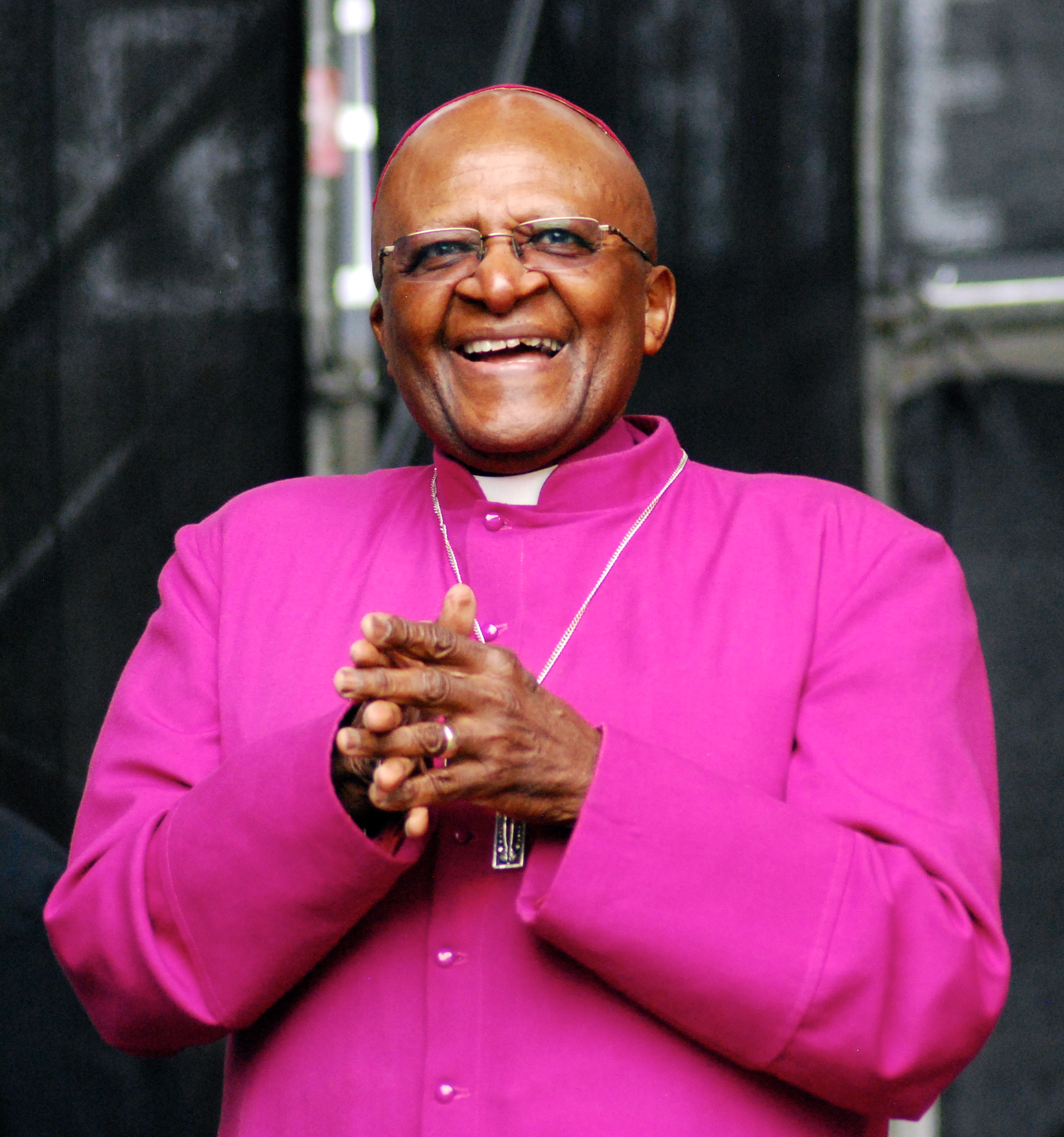
Desmond Tutu was the Archbishop of Cape Town South Africa for over 30 years.  For even longer than that he led the fight against apartheid in South Africa.   Being black in South Africa during that time was a struggle— being black and on the frontlines of that struggle would have no doubt led to suffering and frustration.  He didn’t have an easy life.  Even after apartheid ended in 1994, he continued the hard work of truth telling by leading the Truth and Reconciliation Committee that worked to address the injustices committed during apartheid.  Archbishop Tutu never shied away from hard truths.  Yet I think what he is best known for is his joy, love, hope and his infectious laugh.  At the same time, he made sure to distinguish the hope that he practiced from the sunny optimism the world often associates with the word hope. He said, “I have never been an optimist. I am a prisoner of hope.”

            The Apostle Paul, the author of our 2nd reading, would not have called himself an optimist, but was definitely a proponent of hope.  In his letters, he mentioned hope over 50 times.  In today’s reading he says, “…but we also boast in our sufferings, knowing that suffering produces endurance, and endurance produces character, and character produces hope, and hope does not disappoint us...”  One commentator described this as “chain reaction of grace” because it starts with the fact that we are standing in grace.  Grace is the free, undeserved gift that God has given all of us.  It’s the love that God gives us regardless of whether we deserve it or even want it. We have all been called to stand in grace.

            I have to say that I both love and hate these words of Paul.  I love the idea that suffering can create endurance which would then lead to character and inevitably hope.  I love the idea.  What I am not too fond of is the actual experience of suffering.  I don’t know anyone who is.  It kind of reminds me of that phrase “What doesn’t kill you makes you stronger.”  I have never liked that phrase much either.  Because I have witnessed a lot of suffering that didn’t lead to strength or hope.  Sometimes suffering just leads to anger or depression. 

            It would be easy to say well the difference is that as Christians, we have faith and that enables us to transform our suffering into strength and hope.  Yet I have seen many Christians who can’t make it to the other side of suffering. And it’s not because they weren’t good Christians.  It’s not because they weren’t faithful enough.  Sometimes it’s because the suffering was too intense, too endless. There was no reprieve.  I don’t believe that Christians have some special sauce that enables us to have hope in the midst of pain.  I think our hope is different. 

            You see our hope isn’t based in some idyllic life that we have been promised.  It’s not based merely on what can be. It’s based on what Jesus did for us and what he continues to do for us.  Christian hope is born not in life, but in death, in the death of Jesus Christ.  Jesus suffered in both his life and death.  That suffering is what enabled Jesus to be resurrected and thus enables us all to have new life.  Our hope is different than the hope we might read about in greeting cards and chicken soup for the soul kind of messages. Our hope was forged out of darkness and death. [1] That is why darkness and death cannot defeat Christian hope...because darkness and death---they birthed hope.  That is what makes the hope we have in Jesus so incredibly powerful.

            But here’s the thing, this Christian hope isn’t easy.  Having it doesn’t even make our lives easier. In some ways, life becomes harder with hope.  Esau McCauley, a priest and writer, wrote, “Hope is a demanding emotion that insists on changing you.  Hope pulls you out of yourself and into the world, forcing you to believe more is possible.” [2]

            That’s what Archbishop Tutu meant when he said that he was a “prisoner of hope.” Once that hope took hold of him, he could not give up.  He could not despair.  Despair is a horrible feeling, it really is.  No one would want despair.  Yet while hope is demanding, “despair allows us to give up our resistance and rest.”[3]  That makes being in a state of despair easier because we can stop trying to make the world better….we can stop being aware of the pain and anguish that surrounds us.  We can just stop.  And I have to say, that can be tempting sometimes.  In a world that is broken and in desperate need of repair, it’s tempting to throw our hands up in the air and say, “Well, there is obviously nothing I can do about this, I might as well just stop trying…stop hoping.”

            We think that hope is something that should come to us naturally…but it’s not our natural state.  It’s something we have to work for.  That work can be exhausting.  You might be thinking, that doesn’t sound very good.  If that is what hope is, why would we want it? Why?  Because we Christians stand in grace.   That is God’s gift to us.  It’s our starting point.  And while hope is challenging, it’s also uplifting.  It brings joy.  It is life giving.  It gives us life and it gives those around us life.  Despair, it’s easier because we don’t have to do anything.  We don’t have to face the hard truths or our world. We don’t have to face how even our actions contribute to the despair of others.  But that is not why God put us on this earth.  We are not here to lean into despair.  We have not been given grace so we can squander it.  We, (the church) must be beacons of hope in this dark and lonely world.  We cannot give into the despair or the hate or the apathy. 

            Our Gospel reading says that Jesus saw the crowds and had compassion on them because they were harassed and helpless.   Then he told the disciples, “The harvest is plentiful, but the laborers are few; therefore ask the Lord of the harvest to send out laborers into the harvest.” The harvest is the people who are living in despair, who can’t see out of their despair. Sometimes we are part of the harvest.  There are times, when we all might be in that place.  But there is also a lot of time when we are the laborers, when we are prisoners of hope who can’t possibly give up.  The harvest is plentiful.  Despair and darkness can indeed feel overwhelming.  But never forget that Christian hope was forged in darkness and death, which is what makes it indestructible and impenetrable.  Be a prisoner of hope.  Let hope captivate you.   Whatever is happening in our world, whatever suffering we might encounter, never forget Christianity was created because death was defeated. And that—that is a hope that never disappoints.  


[1] This idea comes from a commentary by Scott Hoezee and can be found here: https://cepreaching.org/commentary/2016-05-16/romans-51-5/

[2] https://www.nytimes.com/2023/04/08/opinion/easter-jesus-judas-hope.html?searchResultPosition=2

[3] https://www.nytimes.com/2023/04/08/opinion/easter-jesus-judas-hope.html?searchResultPosition=2


Sunday, May 28, 2023

Bold Worship: May 28, 2023

 Year A, Pentecost                                           Acts 2:1-21                                                                           

            It started as a simple chapel service at Asbury University on Feb 8th, where the assistant soccer coach preached a sermon on Romans 12.  After he left the worship service he texted his wife and told her that the sermon was a “total stinker.”  He left, but about 20 students stayed to pray.  Some left, but more joined.  This turned into an 11 day non-stop worship service.    Asbury University is a Christian school in the town of Wilmore Kentucky, which has a population of 6,000. This 11 day worship service attracted tens of thousands of people.  At one time, there was a line ½ mile long to get into the university’s chapel.

            One of the things that enabled word to spread about this 11 day worship service was social medial platforms like Tiktok.  People came from across the country to witness what was happening.  It was on virtually every news outlet in print, online and on TV.  Many who learned about it were thrilled.  Given the constant news that we read and hear which tells us that young people, especially Generation Z, is moving away from faith and religion, it was inspiring and heart warming to see so many young people in one place lost in worship.  And if you look at the pictures of where they were worshipping, it’s a traditional church.  There weren’t big screens or flashy effects.  They had a band, but it wasn’t anything outrageous.  All in in all, it was traditional worship with singing, praying, preaching and testimonies.  

            Yet as you can imagine, there was also a fair share of naysayers, people who were skeptical.  This was not just coming from people who were not religious. It was coming from Episcopalians, Lutherans, Presbyterians…those of us who are a little more skeptical of worship that seems unstructured and spontaneous.  Many people decided that anything that reeks of a revival must be contrived.  People said it was emotional and spiritual manipulation. 

However, there was no money being made, no flashy celebrity preachers.  Once the administration of the school got organized, they decided not to let big name pastors and musicians come in and take over. They explicitly said, “There are no celebrities here, no superstars, except Jesus.”  Still the criticism came from all sides.  There were countless articles and blogs on how we could determine whether this was a real experience of God.  Could we only know based on what the outcome was---OR---is it about how it transformed the hearts and minds of those who attended?

            This all happened in February of this year.  I read a bit about it when it was happening, but hadn’t really thought about it much since.  However, as I was reading this lesson from Acts, I found some interesting similarities.   First of all, both of these outpourings of the spirit started because people were already gathered in a place, ready and willing to worship God.  The students were at a chapel service.   The disciples were gathered in prayer.  There was also a large group who had collected in Jerusalem, apparently right around where the disciples were.  These people were Jews from many different nations, who had come together for their own holy feast, the Jewish feast of Pentecost (we took their name.) In the Jewish faith, Pentecost marks the end of the spring harvest.  It was when people came together to present the first fruits of the harvest.  It was a time to praise God and show gratitude for all God had given. 

            The other similarity is the reaction that this spontaneous worship received.  In the Acts story of Pentecost, onlookers accused the disciples of being drunk on wine.  Peter had to start his speech by saying, “Indeed, these are not drunk as you suppose, for it’s only 9am in the morning.”   What a way to start a sermon.  No one accused the students at Asbury and those who eventually joined of being drunk.  But they were accused of spiritual and emotional manipulation.  People assumed their worship couldn’t possibly be genuine…that we would only know if it was a real revival if lives and communities were transformed.  I would love to know who gets to make that determination.

            Comparing these two events, 2,000 years apart, it makes me realize that it  doesn’t matter how you worship, someone is going to accuse you of not being genuine.  When Episcopalians go visit a church with screens and bands, they often will call it a performance.  When those who are not accustomed to traditional liturgy observe our worship, they see the liturgy as performative.  They observe us reading words out of our Book of Common Prayer or our service leaflet and conclude that we cannot possibly mean what we are saying because we are reading instead of praying from the heart.

It doesn’t matter what way we worship, someone somewhere will judge us.  It’s been happening for millennia and it will continue to happen.  Sometimes I think that awareness inhibits us from talking to others about our faith.  God forbid someone calls us a hypocrite.  God forbid someone thinks that we don’t know exactly what we are talking about.  Here’s how I think that we can know the Spirit was present at Asbury University 4 months ago and in Jerusalem 2000 years ago— they didn’t let the critics stop them.  They let the spirit dictate how they were worshiping, how long they were worshipping and in the case of Acts, what they sounded like when they worshipped.

We have been hearing about the Holy Spirit for a few weeks in our readings and I spoke about it in a two sermons.  In one I said that I wasn’t sure how I felt about the images that we use on Pentecost—images like fire and wind.  Because when Jesus described the Holy Spirit, it was by saying that it abided with us, it stayed with us, the people of God.  And wind and fire…they don’t usually stick around. 

However, I think there is a place for a Holy Spirit that presents itself with wind and fire. Why? Because, it’s public.  It’s in your face.  It’s unavoidable.  We love our subtle evangelism in the Episcopal Church.  We love to say that we don’t have to talk about faith because we let our actions show how and what we believe.  Actions are important.  But the thing about Pentecost Sunday is that it was all about a very public display of faith that came in words that all who attended could understand.  That is how the Holy Spirit showed up---with wind, fire, words, comprehension and then a sermon that summed it all up. 

Where will that wind and fire take you? I hope that it will give us all some boldness, not only in action, but in speech, that we need not be ashamed of who we worship, or how we worship—that we need not  be ashamed of how Christian we are or are not—that instead we can hold on to that Holy Spirit that abides with us and gives us strength…but that we can also  let the flames and winds of Pentecost embolden us as they did the first disciples and converts—that the wind might propel us out into our neighborhoods and workplaces so that we can be the Christians (in word and action) that God has called us to be.  Where will the wind and fire take you?  I don’t know?  I hope it takes you somewhere that needs God’s love and passion and then brings you back to be fed by the Holy Spirit once more.

Thursday, May 18, 2023

The Holy Spirit is Super Glue: May 14, 2023

 Year A, Easter 6                                              John 14:15-21                                                               

            In one church I served, we had a dayschool and every week we had chapel for the 2-5 year olds.  It was tricky coming up with a way to teach the Bible to 2-5 year olds. I stuck with the Bible stories we often tell children—the parting of the Red Sea, the various miracles, and we sang “This little light of mine” frequently.  I shared this ministry with the rector.  One day I walked in to chapel and saw her with a flip chart and a diagram of the Trinity.  She was focusing on the Holy Spirit, but felt she needed to cover the Trinity in doing so. And while I still can’t help but laugh when I remember this flip chart and her effort to teach the Holy Spirit to this age group, I also have to give her a lot credit for trying to demonstrate it visually.  She knew that kids need visuals even more than adults.  And for all I know, a child’s mind might indeed understand the Holy Spirit more than adult’s mind.  But it also reminded me of how incredibly hard it is to explain the Holy Spirit.  And yet still, I am going to try to do it…

            Our reading today covers a small portion of what we call the farewell discourse.  Last week we heard the very first part, but it goes on for several chapters.  It’s called the farewell discourse because that sounds a lot better than, “the Long Goodbye.”  As I said last week, Jesus was trying to prepare his disciples for his death and resurrection and even their resurrection.  In doing so, he was preparing them for a life without him, or at least the bodily form of him—how they could carry on.  Not just carry on with their lives, but the message of Jesus as well.

            Over the course of this farewell, there are moments when Jesus was profoundly clear and moments when he was profoundly confusing.  What we hear today is a bit of a mix.  I want to focus on the very first part, which also happens to be the simplest part.  “I will ask the Father, and he will give you another Advocate, to be with you forever.  This is the Spirit of truth…You know him, because he abides with you, and he will be in you.”

The farewell discourse goes on for 3 chapters in the Gospel of John.  In our Gospel, it is presented as a very long speech…thus called a discourse.   However, it probably  wasn’t a long speech as much as it was a collection of sayings that Jesus provided for his disciples over a longer period of time.  Over the course of chapters 14 and 15, Jesus described the Holy Spirit, by describing the actions of the Holy Spirit.  The Holy Spirit will teach, remind, testify about Jesus and abide with the disciples. 

As we hear in this text today, this is the Spirit of truth.  Remember Jesus, just said, “I am the way, the truth and life.”  Having the Spirit of truth with them was another way to be connected to Jesus.  This is the Spirit that will sustain the disciples after Jesus has ascended to heaven.  This is the Spirit that abides with them, stays with them.

We don’t talk about the Holy Spirit much in the Episcopal Church, not unless it’s Pentecost.  And I think one of the reasons we don’t talk much about the Holy Spirit is because the Holy Spirit doesn’t have direct words for us that are laid out in the Bible.  The Holy Spirit is present throughout the Bible, but that presence comes in different forms and is thus more subtle. God the Father and God the Son both speak to us through the words of the Bible, but the Holy Spirit never actually speaks. 

In the Episcopal Church, we love words.  We worship using the Book of Common Prayer that was written over 500 years ago and has been honed over the centuries.  We don’t talk about the Holy Spirit because the Holy Spirit doesn’t speak to us in words, at least not words that have been recorded.  It speaks to us in action. 

The hardest part of losing someone, whether it is to death or something else, is the feeling of abandonment.  Jesus wanted to remove the sting of death, by removing that sense of abandonment. And he could do that, because he was Jesus.  He could do that because he was and is part of the Holy Trinity.  The Holy Spirit is about action, but to some extent it’s about inaction…it’s about what it doesn’t do.  The Holy Spirit never leaves us.

The primary time we talk about the Holy Spirit is Pentecost and that is a moment of drama.  There is wind and fire.  The Spirit descends in a way that the disciples cannot ignore.  Yet I have never particularly liked that description because it’s so beyond our experience.  It happened once and never happened again. Perhaps (and forgive me for disagreeing with centuries of tradition) it would be better if we talked about the Holy Spirit who doesn’t descend with fire and change the way everyone talks.  Instead, let’s talk about the Holy Spirit who refuses to abandon us…whose primary purpose is to be the very presence of Jesus Christ. 

When we picture the Holy Spirit, it’s with a dove, fire or wind.  Doves fly away. Fires burn and fade.  Wind sweeps through an area and then moves on.  Yet the word that Jesus uses for Holy Spirit is abide.  The Holy Spirit is like the super glue that we can never get unstuck. Have you ever gotten super glue on your body? That stuff will pull off your skin.  You need heavy chemicals to get that off.  But if you want to fix something, if you want to ensure that something sticks, well that is what you use. You can depend on super glue.

That is what I want and need from God, a God who I can depend on.  A God who will never leave my side, not even when I try my darndest to get rid of God, to ignore God…that God will never leave our side.  And that…that is the God I want and need.  I think that is the God that we all need.   Jesus told his disciples, “I will never leave you orphaned.”  Jesus promised that he would always be with us.  It’s a promise we wish we could require from so many in our lives, but it’s a promise we can only expect from Jesus.  We can expect it because it was a promise and Jesus…always keeps his promises.


Monday, April 24, 2023

Why are we shooting each other? April 23


Year A, Easter 3                                            Luke 24:13-35                                                             

         In the past week, there have been 4 incidents of people being shot for being in the wrong place and being a stranger.  The first was a 16 year old boy who knocked on the wrong door.  He was shot twice. The 2nd was a 6 year old and her father who went to retrieve a basketball that had rolled into someone’s yard.  The third was a young woman who drove into the wrong driveway. She died. The fourth incident involved two high school girls who accidentally got into the wrong car and were immediately shot.  One week.  One young woman killed and 5 injured for making a mistake that everyone of us has probably made.  How many of us have knocked on the door of the wrong house, drove into the wrong driveway, walked into someone’s yard to retrieve a ball or tried to open the door of a car that looked like yours? I have done all of those things.

These were all different areas of the country. The victims were all young, but that was really all they had in common.  The perpetrators all seemed to have little in common as well.  It seems to me that the only common denominator is fear, particularly fear of strangers. None of the victims were known to those who did the shooting. 

What I want to know is how we got to this point, where 4 different people thought the best thing to do was not simply ask a question and take 10 seconds to find out why the person was in the wrong place, but instead, shoot the people.  How did we get to this place? 

            One of the interesting things about the resurrection accounts is that the disciples of Jesus never recognized him, not at first.  He was always a stranger to them.  It is not clear as to why his closest friends and disciples didn’t recognize him.  Some hypothesize that it was a kind of post traumatic stress.  And that makes sense when you think about it.  Listen to what Simon and Cleopas told Jesus, “But we had hoped that he was the one to redeem Israel.”  Jesus had been their chance at redemption and freedom and now he has been killed by the very people who he was supposed to free them from, the Romans.  They had hoped.  They had put all their hope in this man, and now he was dead. 

They were coping with two kinds of trauma—the violent death of someone who they loved and a lost hope.   Anytime someone we love dies, we experience a tremendous loss.  Sometimes that comes with losing hope—hope for a future with someone who is no longer living with us.  Yet Jesus had promised more than just a future with him, he had promised salvation and freedom. He had promised redemption and healing to all people.  When he was killed, people were terrified that all those promises were lost.  It was a trauma of epic proportions.  Embedded in trauma is fear, fear of what will happen next, knowledge that while we may have survived this trauma, we may not survive the next.  Fear is what made it so difficult to recognize Jesus—to believe that it could be Jesus.

On Easter, I talked about Mary Magdalene’s relative lack of fear. I hypothesized that she was able to handle her fear because of the afflictions she had coped with in her life. She didn’t recognize Jesus immediately, but it didn’t take her very long. It took longer for the men in our Gospel reading. I think these two men who met Jesus on the road had a little more fear than Mary did.  This is the first time we even hear their names, so they probably didn’t have as close a relationship with Jesus as Mary and the apostles.  And they were heading away from Jerusalem.  They were basically fleeing the scene.  They were scared. 

So it took them longer, longer to recognize Jesus, longer to remember that hope that they once had.  But they eventually did.  They did because they spent time with him, listened to him, got to know this man who they thought was a stranger.  The more time they spent with him, the less fear they had.  The reason they were able to overcome that fear was because hope was still there. They might have lost their hope for a time, but they never forgot it.  It was that foundation of hope that saved them.

To some varying degree, almost every person in our world is dealing with some  kind of trauma, which means that everyone is afraid.  Not only that, we have become isolated.  It was happening before the pandemic and then COVID made it that much worse.  We also have this wonderful 24 hours news cycle that seems to feed off of fear, which really isn’t helping matters. 

So what’s different now? Why are people so quick to shoot the stranger in front of them?  Part of it is because we have become isolated and it’s easy to avoid people who are different than us.  Many people are able to avoid interacting with anyone not like them. It’s also because fewer and fewer people have the foundation of hope that our faith gives us.  It’s one thing to deal with fear and loss when you have a foundation of hope and love.  It’s another thing to deal with that when you have no hope to begin with.  That is much more dangerous.

Everything that has happened over the last week (and the last several years) makes me angry. It makes me want to lash out and blame someone or something.  That is what a lot of people are doing. But that just feeds the fear and hopelessness.  Jon Meacham wrote: “Fear points at others, assigning blame; hope points ahead, working for a common good. Fear pushes away; hope pulls others closer. Fear divides; hope unifies.”

As people of faith, we cannot allow ourselves to fear the stranger and to blame the other.  We can’t isolate ourselves in our safe places of hope and comfort.  We have to share this hope that God has given us.  Because people are starving for hope in our world and that dearth of hope is killing people.  It is literally killing people.  What can we do?  We can stop blaming the other political party.  We can stop blaming “the other.” We can stop letting fear be our guide when we have a much better guide in Jesus Christ. 

Notice that Jesus walked with the disciples and they walked WITH him, even though they thought he was a stranger.  In the same way, we can start walking along others, even the people who may scare us a little.  I am not telling you to start knocking on strangers doors, but there are safe ways that you can get to know people who are different than you.  If you aren’t quite ready for that, try to talk to the people who you know—who you know but might not agree with, and talk about those things. We are so busy avoiding talking about things that upset us, but it means we are no longer able to understand where others might be coming from.  That means that even people we know are becoming strangers. 

One of my favorite psalms is Psalm 139.  Lord you have searched me and known me.  It’s all about the God who knows us so well because he formed our inward parts.  It’s a gift to be known and loved by God.  Being known by an all loving being is what gives Christians the strength to deal with trauma and pain. And guess what, it’s not just us who God knows.  God knows all his children.  So think about that the next time you see someone who makes you a little nervous, a little wary.  Remember they too are created in God’s image. For God, there are no strangers. 

Tuesday, April 11, 2023

The Wounds that Transform Us: April 9, 2023


Easter, Year A                                             John 20:1-18                                                                           

           Mary Magdalene wasn’t afraid.  She wasn’t afraid when she walked alone to the tomb in the dark…not when she realized that the stone had been rolled away, not when the two angels appeared out of nowhere…not even when a mysterious man approached her who she thought might just be the person who stole the body of Jesus.  She wasn’t afraid. Now you might be thinking, but how could you possibly know if she was scared since her emotions aren’t detailed in the text? That’s true.  But if you compare the 4 Gospels, you will see an interesting juxtaposition.  Matthew, Mark and Luke all have multiple women going to the tomb. John is unique in that it mentions only Mary Magdalene.  All 4 Gospels describe either angels or someone robed in white appearing to the women.  Matthew, Mark and Luke all say that the women were afraid or record the angels telling them not to be afraid. 

            This phrase (Do not be afraid) might be familiar to you, not just because of the Easter story, but because of the Christmas story.  When the angels appeared to share good news, they were always telling people not to be afraid.  This is a theme throughout the Bible, the appearance of an angel scares people.  Yet in John, it never says that Mary is afraid and the angels never tell her not to be afraid. Then when she sees the man who she doesn’t recognize, she doesn’t cower in fear, she demands an answer from him.  “Tell me where you have laid him.”  A woman alone with a strange man, even in this day would be intimidating.  But in Jesus’ time, it was downright terrifying for any number of reasons.

            There was a fierce courage to Mary of Magdela.  There have been a lot of misconceptions about Mary over the years.  Dan Brown made it significantly worse with the DaVinci Code.  She was not a prostitute nor was she a woman caught in adultery.  At some point, someone just conflated all the unnamed women in the Gospels to one woman and all of their gifts and sins got attributed to Mary of Magdela.  The only thing we know about her was that she was an early follower of Jesus.  She started following him after he cured her.  She was at the crucifixion, at the tomb and she was the first person to see the risen Christ.  So here is what I want to know, what gave her the courage to sit at the foot of cross and watch him die, then visit the tomb alone and then eventually spread the rather unbelievable news that he had risen?  I want to know because I want that courage.

            In order to find the source of that courage, we need to go back to the first time we hear about her, which was a very brief mention. She started travelling with Jesus and the disciples after Jesus cured her of seven demons.  At the time, people assumed someone who was possessed by demons was evil in some way. But more likely, the individual was tormented, not evil.  It could have any emotional illness that we now have terminology for.  It could have been extraordinary grief. It might have been a physical illness. Anyone who lives with that kind of affliction has to have some courage.

            Think about it— think about the time in your life that was the most difficult, the darkest time. I bet it was hard just to get out of bed.  And maybe you didn’t get out of bed that day, but you eventually did.  That required courage and faith.  This woman had that courage in spades, even before she was healed.  Yet once she was healed, she also had what seem like an unshakable faith, the faith that comes from living through hell and coming out the other side, the faith that comes from a personal encounter with Jesus.

            It was that faith and that courage that allowed to her to stay and watch her Lord and Savior die.  It was that faith and courage that propelled her to the tomb on that dark and lonely morning. Now I am not saying that her faith was absolute.  I almost started this sermon saying she was fearless.  I don’t think she was.   I believe she was resilient because she had to fight over the course of her life.  During her times of greatest pain and anguish, she was probably alone quite a bit, which meant going to a tomb alone didn’t scare her.  And once you’ve been the home of 7 demons, a couple of angels aren’t going to scare you either.  Facing those immense challenges in her life and then being healed by Jesus equipped her with the courageous faith that she would need to be a disciple and then an evangelist.

            Episcopalians don’t typically talk about demons, so this might be a leap, but I want you to think about your own demons.   Maybe change the word to affliction or burden.  It could be depression, anxiety, chronic pain, a disease, addiction….anything that inhibits you and keeps you from being the person that God has called you to be.  Some of these afflictions are with us a lifetime and some are temporary, but they all leave their mark in some way.  Usually we assume those marks make us less than, not good enough, not strong enough.  But if someone with 7 demons could become a disciple and an evangelist, why not you? 

            You might think, well yeah, but she was cured by Jesus.  She was free.  That’s true.  No doubt getting cured by Jesus gave her a bit of a head start.  Yet…I bet those demons—even exorcized demons— left their mark.  She never forgot them. She could either let that hold her back, or propel her forward.  Remember, even Jesus’ resurrected body still had scars.  We are all wounded in some way.  We are all tormented by something. What matters is how we let those afflictions and wounds change us.  Do we try to hide them?  Are we ashamed of them? Or do we give them over to God’s power and let them transform us into a more complete and beautiful version of ourselves?  Do we let them transform us into a beloved child of God?

            Someone once said that courage is telling the story of who you are with your whole heart.[1]  Being a disciple of Jesus, watching him die, and going to the tomb….all required courage. But I wonder, if the thing that really required courage was Mary telling the other disciples, “I have seen the Lord.” Because her story used to be that she was the woman possessed, that there was something wrong with her.  That she was broken.  But now…now she was the woman who had seen the Lord. 

Our faith gives us this gift.  It provides each one of us with the ability to change our story, transform our afflictions and wounds into something new and beautiful.   That gift is freely given.  Yet it is on us, to accept that gift and allow it to transform us—to live into the Easter message, that God can make all things new, even you and me.


[1] Brene Brown